Alpha-Lipoic Acid (ALA) and Your Liver: How It Supports Liver Health
Alpha-lipoic acid is a dual-soluble antioxidant traditionally used to support the liver. Here is how ALA helps with fat metabolism, inflammation, oxidative stress, and detox, plus typical daily ranges and safety tips.
Maya Mountain Naturals Editorial · Published June 22, 2026 · 9 min read
Quick answer
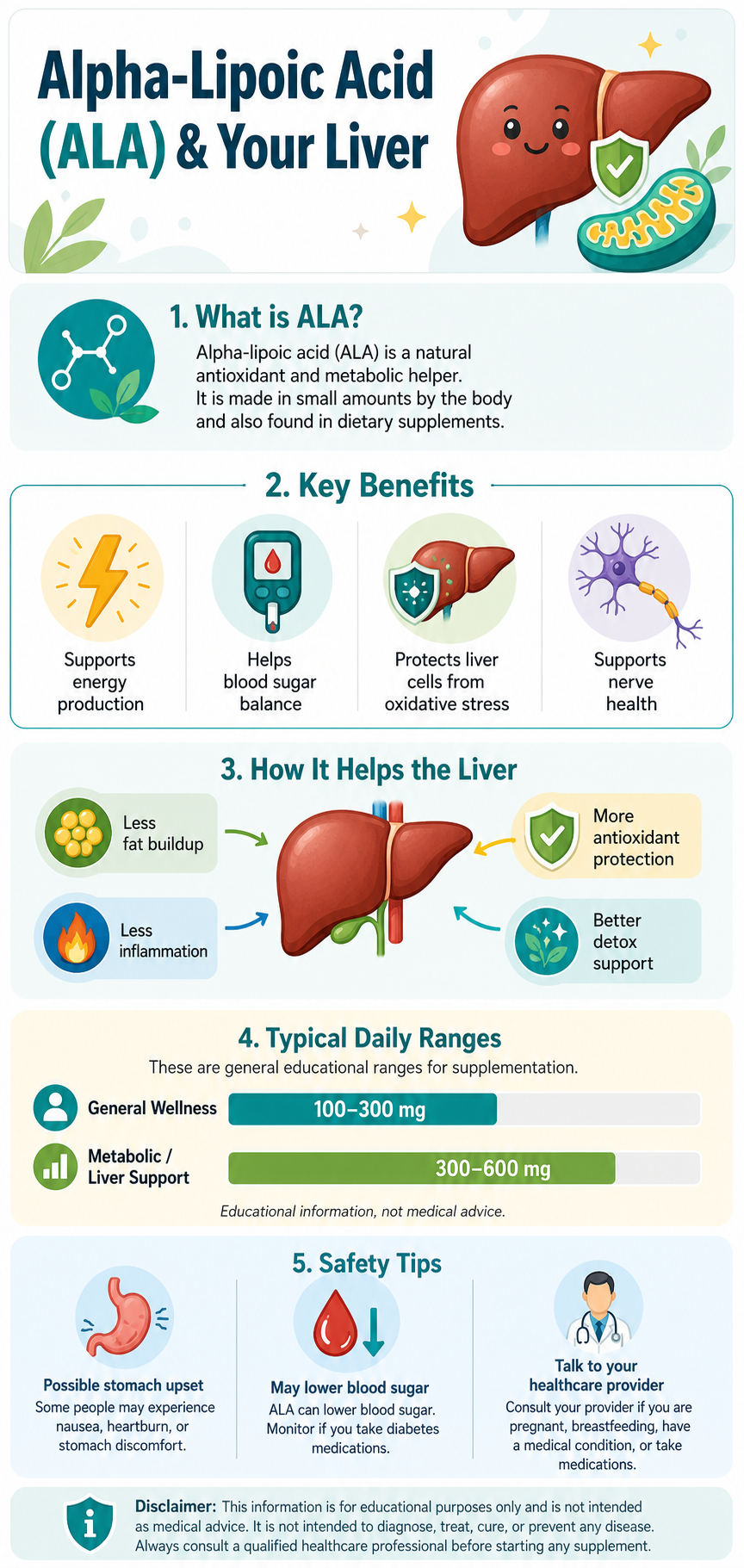
- Alpha-lipoic acid (ALA) is a natural antioxidant and metabolic helper made in small amounts by the body and also found in dietary supplements.
- In the liver it is traditionally used to support antioxidant defense, healthy fat metabolism, and a calmer inflammatory tone — the same pressures that drive fatty liver.
- Because it works inside the mitochondria (the cell's energy factories), it helps the liver process fuel and recycle other antioxidants like vitamin C, vitamin E, and glutathione.
- General wellness ranges run about 100–300 mg per day; metabolic and liver-support routines often use 300–600 mg per day, split with meals.
- ALA can lower blood sugar, so anyone on diabetes medication, pregnant, breastfeeding, or managing a health condition should talk to their provider before starting.
Alpha-lipoic acid is one of the few antioxidants that works in both water and fat, which lets it reach nearly every part of a liver cell — including the mitochondria, where fuel is burned and damage often begins. That dual reach is why it is traditionally used to support the liver's own antioxidant and metabolic systems rather than acting on any single symptom. Used sensibly, alongside good food, movement, and steady blood sugar, it can be a thoughtful ally for liver health.
What is alpha-lipoic acid?
Alpha-lipoic acid (ALA), sometimes called lipoic acid or thioctic acid, is a sulfur-containing compound your body makes in small amounts. It plays a central role in turning food into usable energy and acts as a versatile antioxidant.
What sets ALA apart is that it is both water-soluble and fat-soluble. Most antioxidants work in only one environment — vitamin C in water, vitamin E in fat. ALA moves freely through both, which means it can protect the watery inside of a cell and the fatty membranes that surround it.
The body's own production declines with age, and dietary amounts are modest — found in small quantities in organ meats, spinach, broccoli, and tomatoes. This is why many people interested in metabolic and liver support look to supplements.
How does ALA help the liver?
The liver is one of the most metabolically active organs in the body, and it is densely packed with mitochondria. That makes it both a powerhouse and a frequent target of oxidative stress. ALA supports the liver in four connected ways.
- Less fat buildup: ALA is traditionally used to support healthy fat metabolism, which matters when excess fat accumulates inside liver cells.
- Less inflammation: by calming oxidative stress, it helps support a healthier inflammatory tone in liver tissue.
- More antioxidant protection: ALA neutralizes free radicals directly and helps regenerate other antioxidants the liver relies on.
- Better detox support: it supports glutathione, the liver's master antioxidant central to everyday detox pathways.
Because these pressures — fat accumulation, inflammation, and oxidative stress — are the same forces behind fatty liver, ALA is often discussed alongside metabolic and liver-support routines.
Why the mitochondria matter
Mitochondria are the tiny engines inside every liver cell that burn fuel for energy. When they are overwhelmed — by too much sugar, too much fat, or chronic inflammation — they leak free radicals and the whole cell suffers.
ALA is a natural cofactor for the enzymes that feed these engines. By supporting mitochondrial function, it helps the liver process fuel more cleanly and produce less collateral damage in the process. This is also why ALA is associated with energy production and steadier blood sugar, not just liver health.
How do people often use ALA?
Most people take ALA as a daily supplement, with food, and tend to split larger amounts across the day.
- General wellness: roughly 100–300 mg per day.
- Metabolic or liver support: often 300–600 mg per day, divided into two doses.
These are general educational ranges for supplementation, not medical advice. Some people prefer the "R-lipoic acid" form, which is the form the body makes naturally; standard ALA is a mix of two forms and is more widely available and affordable.
ALA is best paired with the habits that actually move liver health: a plant-forward, Mediterranean-style way of eating, regular movement, stable blood sugar, and limiting alcohol and ultra-processed foods.
Who should be cautious?
ALA can lower blood sugar, which is helpful for some people but risky for others without guidance.
- People on diabetes medication should monitor closely, as ALA may add to the blood-sugar-lowering effect.
- Pregnant or breastfeeding women should avoid it unless a provider advises otherwise, as safety data is limited.
- Anyone managing a thyroid condition or scheduled for surgery should check with a provider first.
- Sensitive stomachs: some people notice nausea, heartburn, or mild stomach upset, usually eased by taking it with food.
When to talk to a doctor
Talk to a qualified health professional before starting ALA if you take prescription medication, have diabetes or a thyroid condition, are pregnant or breastfeeding, or have an existing liver diagnosis. Persistent fatigue, abdominal discomfort, or abnormal liver test results always deserve a professional evaluation rather than self-treatment.
Frequently asked questions
Frequently asked questions
What is alpha-lipoic acid used for?
ALA is a natural antioxidant and metabolic helper. It is traditionally used to support energy production, healthy blood sugar balance, antioxidant defense in liver and nerve tissue, and the liver's own detox pathways. It is supportive rather than a treatment for any disease.
How does ALA support the liver?
It works inside liver cells and their mitochondria to support healthy fat metabolism, a calmer inflammatory tone, stronger antioxidant protection, and glutathione — the liver's master antioxidant. These are the same systems under pressure in fatty liver.
How much alpha-lipoic acid should I take?
General wellness routines often use about 100–300 mg per day, while metabolic or liver-support routines commonly use 300–600 mg per day split across meals. These are educational ranges, not medical advice — confirm the right amount with your provider.
When is the best time to take ALA?
Many people take it with meals to reduce the chance of stomach upset and to split larger amounts across the day. If you take diabetes medication, timing and monitoring matter, so coordinate with your provider.
Can ALA lower blood sugar?
Yes, ALA can lower blood sugar. That can be useful for some people, but if you take diabetes medication it may add to the effect and require closer monitoring. Talk to your provider before combining them.
Is alpha-lipoic acid safe to take every day?
For many healthy adults, daily use within common ranges is generally well tolerated, with mild stomach upset being the most frequent complaint. Pregnant or breastfeeding women, and anyone on medication or with a health condition, should check with a provider first.
What is the difference between ALA and R-lipoic acid?
Standard ALA is a 50/50 mix of two mirror-image forms, while R-lipoic acid is the single form your body produces naturally and may be better absorbed. R-lipoic acid is usually more expensive; standard ALA is more widely available and affordable.
MMN takeaways
Alpha-lipoic acid earns its reputation as a quietly versatile ally for liver and metabolic health — a dual-soluble antioxidant that reaches places most others cannot, supports the mitochondria where damage begins, and helps the liver recycle its own defenses. It is not a cure-all, and it is not a substitute for the diet, movement, and blood-sugar stability that drive real liver change. Used thoughtfully, at sensible amounts, and with your provider's input if you take medication, ALA is a reasonable addition to a liver-friendly toolkit.
This information is for educational purposes only and is not intended as medical advice. It is not intended to diagnose, treat, cure, or prevent any disease. Always consult a qualified healthcare professional before starting any supplement.