Fatty Liver and Blood Sugar Imbalance: Natural Solutions and Herbal Allies
How fatty liver and type 2 diabetes share the same metabolic roots — and the diet, movement, and herbal allies (milk thistle, berberine, curcumin) that help reverse them naturally.
Maya Mountain Naturals Editorial · Published June 16, 2026 · 10 min read
Quick answer
- Fatty liver and type 2 diabetes share the same metabolic roots: insulin resistance, excess liver fat, and chronic inflammation.
- Early-stage fatty liver is often reversible with sustained changes in diet quality, weight, movement, and blood sugar stability.
- A plant-forward, Mediterranean-style way of eating lowers liver fat and improves insulin sensitivity at the same time.
- The best-supported herbal allies are milk thistle, berberine-containing herbs, and turmeric/curcumin — used alongside (not instead of) lifestyle change.
- Berberine can lower blood sugar, so use it cautiously alongside glucose-lowering medication, and seek medical care for warning signs like jaundice or dark urine.
Fatty liver and type 2 diabetes often grow from the same metabolic roots: insulin resistance, excess liver fat, chronic inflammation, and a food environment that overwhelms the body's ability to regulate energy well. When the liver becomes packed with fat, it tends to release too much glucose into the bloodstream, which can worsen insulin resistance and push blood sugar higher over time.
Why the liver and blood sugar are so connected
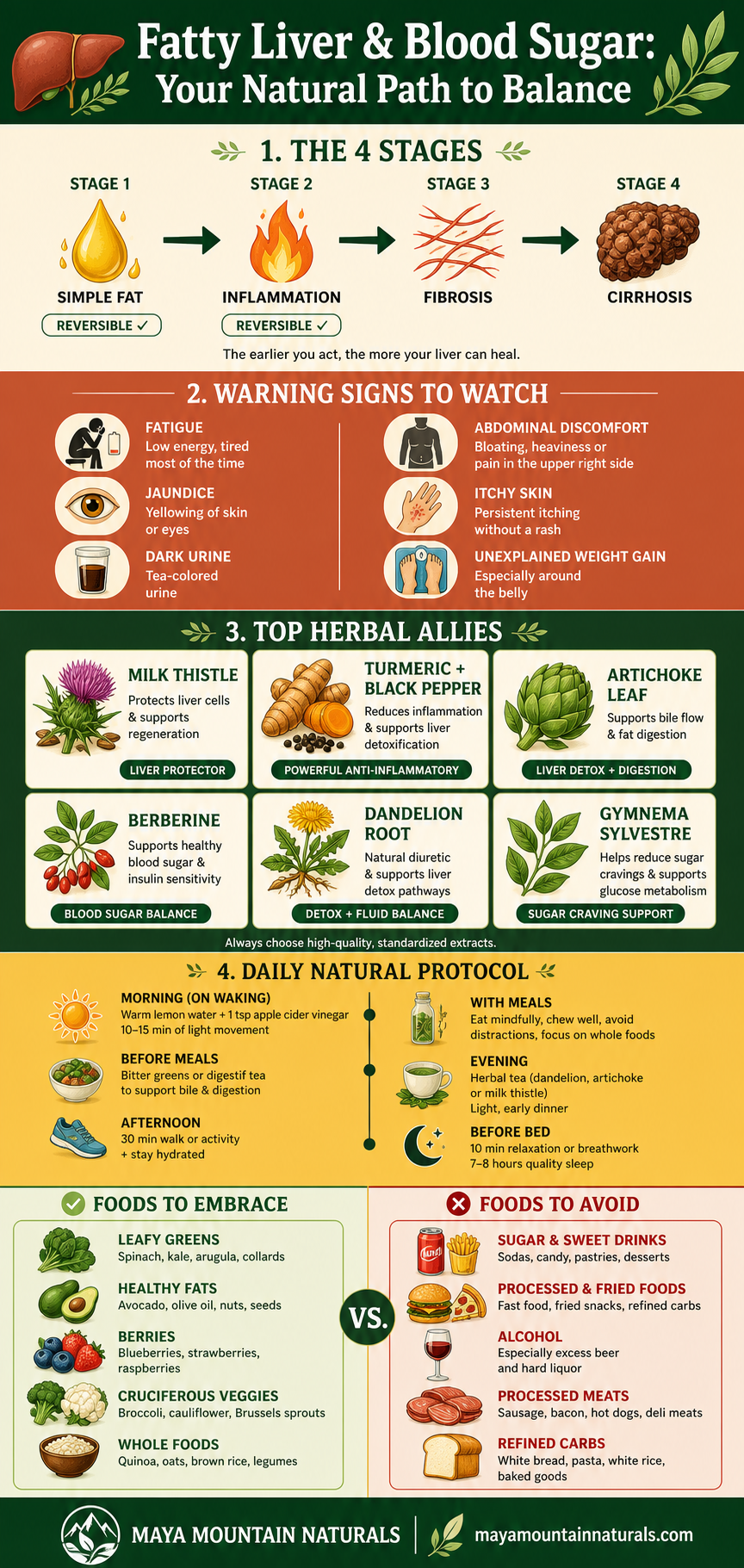
The liver helps regulate blood sugar, stores glycogen, processes fats, and manages many detoxification pathways. When too much fat builds up in liver cells, the condition is now commonly called MASLD, or metabolic dysfunction-associated steatotic liver disease. This process is often quiet at first, but it can progress from simple fat accumulation to inflammatory liver injury, fibrosis, and eventually cirrhosis if root causes are not addressed.
Fatty liver usually causes few or no symptoms in the early stages, which is why many people discover it only after routine blood work or imaging. When symptoms do show up, they often include fatigue, feeling unwell, and discomfort in the upper right side of the abdomen. More serious warning signs include jaundice, dark urine, itchy skin, bruising easily, abdominal swelling, vomiting blood, or black stools, all of which need prompt medical attention.
Stages of fatty liver
Fatty liver disease generally progresses through four broad stages:
- Simple steatosis: fat is present in the liver, but there is little or no inflammation or cell damage.
- Steatohepatitis: fat accumulation is accompanied by liver inflammation and cellular injury.
- Fibrosis: ongoing inflammation leads to scar tissue formation, though the liver may still work reasonably well.
- Cirrhosis: advanced scarring interferes with liver function and raises the risk of liver failure, internal bleeding, infection, and liver cancer.
The encouraging part is that earlier stages often respond well to non-drug measures, especially when weight, diet quality, blood sugar stability, and inflammation are addressed consistently.
Natural foundations that matter most
The strongest natural evidence still points to the basics: food quality, sustainable weight loss, physical activity, and metabolic rhythm. Plant-forward dietary patterns, especially Mediterranean-style eating, are widely recommended because they can reduce liver fat and improve insulin sensitivity at the same time.
Food principles
A helpful food pattern for fatty liver and blood sugar imbalance usually includes:
- vegetables, legumes, nuts, seeds, fruit, and intact whole grains as the core of the diet.
- fewer sugar-sweetened beverages, refined grains, desserts, and ultra-processed foods, which are strongly linked with liver fat accumulation and metabolic dysfunction.
- healthy fats such as olive oil, nuts, seeds, and omega-3-rich foods.
- reduced or avoided alcohol, especially when fatty liver is already present.
Recent research also suggests that structured eating approaches such as intermittent fasting or time-restricted feeding can improve liver steatosis, body weight, waist circumference, and liver enzymes in many people. At the same time, a 2025 comparison found that both intermittent fasting and low-calorie diets improved liver enzymes, while the low-calorie approach showed somewhat stronger effects on steatosis and fibrosis, suggesting that meal timing helps but overall diet quality and calorie balance still matter greatly.
Movement and metabolic flexibility
Exercise improves insulin sensitivity and helps pull glucose out of the bloodstream into muscle, lowering the burden on the liver. Both aerobic training and resistance training support better metabolic flexibility and are considered central non-drug strategies for MASLD. Even short walks after meals may help smooth post-meal glucose rises and reduce metabolic stress over time.
Herbal allies with the best support
Natural medicine offers useful support, but herbs work best as part of a full metabolic strategy rather than as stand-alone fixes. Among the best-supported herbal and plant-derived options, milk thistle, berberine-containing plants, and curcumin stand out most consistently in the literature.
Milk thistle
Milk thistle, especially its silymarin-rich extracts, remains one of the best-known liver-supportive botanicals. Evidence cited in supplement and clinical reviews suggests it may help lower liver enzymes, improve liver fat parameters, and support hepatocyte protection, making it one of the most practical herbs for fatty liver protocols. It is commonly used as a standardized extract or ground seed, though product quality matters.
Berberine-containing herbs
Berberine from plants such as barberry and Coptis has some of the strongest metabolic data among plant compounds for fatty liver patterns linked with insulin resistance. Multiple trials and reviews report improvements in liver fat, lipid profile, insulin sensitivity, and liver enzymes, which is why berberine is frequently discussed in both metabolic and liver protocols. Because berberine can lower blood sugar, it should be used cautiously alongside glucose-lowering medication.
Curcumin and turmeric
Curcumin, the main polyphenol in turmeric, has repeatedly been highlighted for reducing liver inflammation and oxidative stress. Recent review literature notes that curcumin and berberine were effective in reducing hepatic inflammation and oxidative damage in non-alcoholic steatohepatitis. In practical terms, turmeric works best as a steady daily ally in food, tea, or well-formulated extracts rather than as an occasional add-on.
Other helpful plant allies
Broader reviews of plant natural products for MASLD emphasize that many botanicals may help by modulating inflammation, oxidative stress, lipid metabolism, and the gut microbiota. Common traditional allies include dandelion root, artichoke leaf, bitter melon, fenugreek, ginger, and green tea, though the human evidence for these is generally less consistent than for milk thistle, berberine, or curcumin. These herbs may still be valuable in food-as-medicine or traditional protocols when matched to the individual and used consistently.
Questions people commonly ask
Frequently asked questions
Can fatty liver be reversed naturally?
In many people, yes, especially in early stages. Weight loss, better diet quality, more movement, and improved insulin sensitivity can reduce liver fat and improve liver enzyme levels, and fasting-based strategies may also help when they are sustainable and well matched to the person.
Is fasting helpful or overhyped?
Fasting is promising, but it is not magic. Systematic reviews show that intermittent fasting and time-restricted feeding can improve liver steatosis and some metabolic markers, but they do not outperform every other dietary strategy in every study, so consistency and total dietary quality remain more important than any single fasting schedule.
What are the best foods for fatty liver and diabetes together?
The strongest dietary pattern centers on vegetables, legumes, nuts, seeds, whole grains, olive oil, and other minimally processed plant foods, with fewer sweetened drinks and refined carbohydrates. Coffee, green tea, omega-3-rich foods, and high-fiber meals also appear helpful in many liver-supportive dietary plans.
Are herbs enough on their own?
Usually not. Herbs can support liver cells, improve bile flow, reduce inflammation, and help insulin signaling, but the biggest drivers of improvement still come from sustained changes in food intake, body weight, and physical activity.
When should someone seek medical evaluation?
Prompt evaluation is important if symptoms such as jaundice, dark urine, abdominal swelling, vomiting blood, black stools, or easy bruising appear, because these can suggest advanced liver damage or complications. Medical follow-up also matters for anyone with diabetes, obesity, or abnormal liver enzymes, since fatty liver is often silent until it becomes more advanced.
A practical natural framework
A concise natural framework for fatty liver and blood sugar imbalance looks like this:
- Build meals around vegetables, legumes, whole foods, and healthy fats.
- Remove sugary drinks, cut refined carbohydrates, and reduce ultra-processed foods.
- Walk daily and include resistance training several times per week.
- Consider meal timing strategies such as time-restricted eating if they are sustainable.
- Use herbs with the best support first, especially milk thistle, berberine-containing herbs, and turmeric or curcumin.
- Track progress with symptoms, waist size, glucose markers, lipids, and liver enzymes when possible.
For MMN knowledge base readers
The most grounded natural view is that fatty liver and type 2 diabetes are metabolic warning lights, not isolated problems. A successful natural strategy usually combines plant-rich eating, smart movement, better meal rhythm, and a few well-chosen herbal allies instead of chasing a single miracle remedy. That approach is both more realistic and more aligned with the latest research on how liver fat, insulin resistance, inflammation, and gut health interact.