Nitric Oxide: The Longevity Molecule
Nitric oxide is the longevity molecule — it keeps blood vessels young, flexible, and flowing. Learn how it drives healthy aging and how to boost it naturally.
Nitric oxide (NO) has earned a reputation as "the longevity molecule" — and for good reason. It is one of the body’s most important signaling molecules, helping regulate blood flow, oxygen delivery, mitochondrial energy production, immune activity, brain signaling, exercise performance, and sexual health. Because nitric oxide is short-lived and tightly regulated, the body depends on constant renewal through nitric oxide synthase enzymes, dietary nitrates, oral bacteria, and antioxidant protection.
What makes nitric oxide so central to aging is simple: as it declines, the body ages faster from the blood vessels outward. Production naturally falls with age and metabolic stress, while modern habits such as low vegetable intake, poor oral microbiome health, inactivity, and chronic inflammation accelerate that loss. Many researchers describe the gradual drop in nitric oxide as a hallmark of vascular aging — stiffer arteries, slower circulation, tired tissues, and a brain and heart that no longer get the flow they once did. The encouraging news is that nitric oxide is one of the most influenceable longevity levers we have: supporting it naturally is traditionally associated with younger-feeling circulation, better endothelial function, tissue oxygenation, exercise capacity, and vascular resilience.
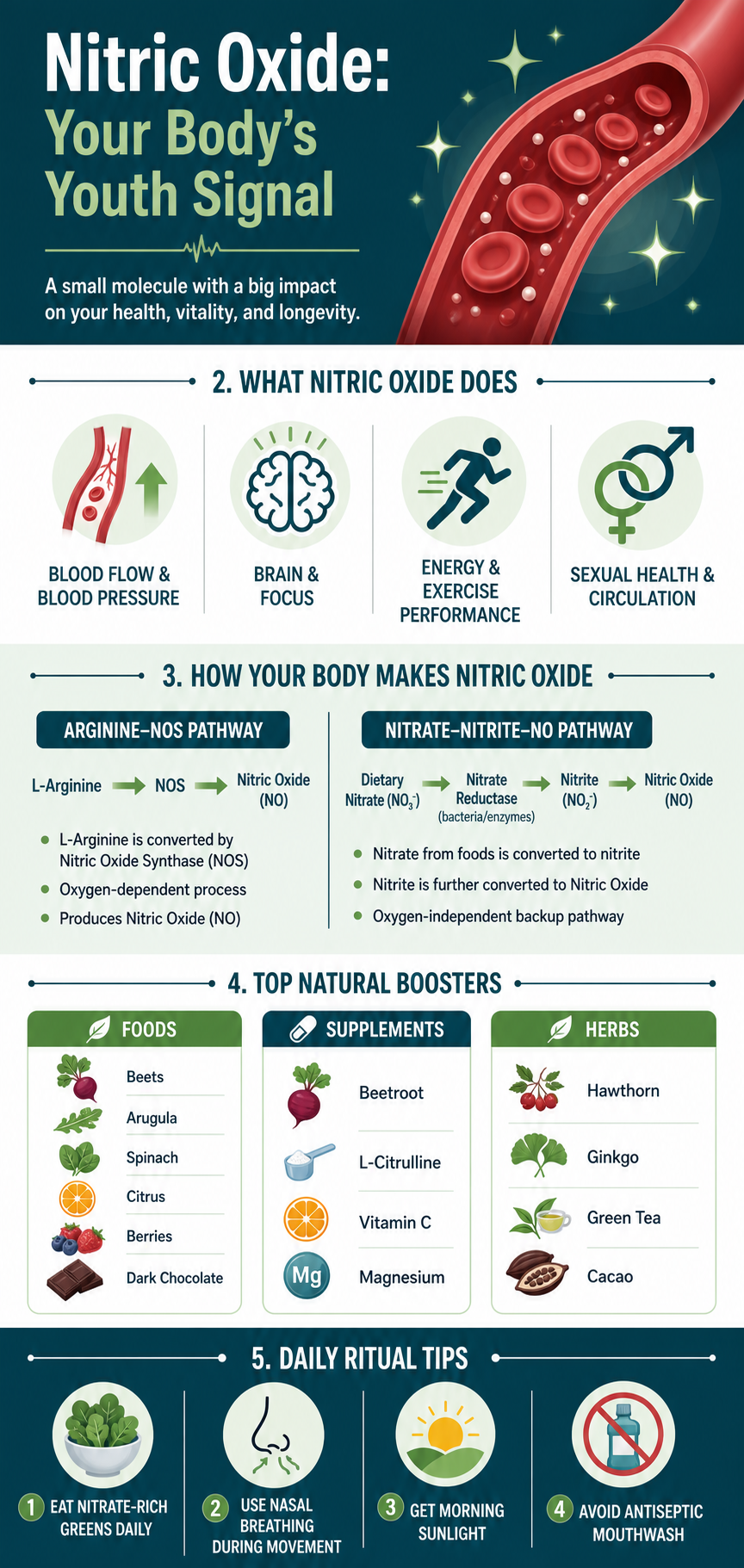
Quick answer
- Nitric oxide (NO) is a short-lived signaling molecule that relaxes blood vessels so they deliver more blood, oxygen, and nutrients.
- Your body makes it two ways: the L-arginine–NOS pathway and the dietary nitrate–nitrite–NO pathway fed by vegetables and oral bacteria.
- It naturally declines with age, inactivity, oxidative stress, and poor oral microbiome health.
- Nitrate-rich vegetables (beets, arugula, leafy greens) are the best-studied way to raise it; polyphenols and movement help protect it.
- Think balance, not maximum: support healthy endothelial NO while keeping inflammatory NO in check.
What Nitric Oxide Does
Nitric oxide is a gaseous messenger made inside the body that diffuses rapidly across cell membranes and signals nearby tissues. One of its most important jobs is activating soluble guanylate cyclase, which raises cyclic GMP and relaxes vascular smooth muscle so blood vessels can widen and deliver more blood, oxygen, and nutrients.
Nitric oxide also helps regulate platelet activity, immune defense, mitochondrial respiration, insulin sensitivity, and neurotransmission. In practical terms, this means healthy nitric oxide status supports cardiovascular function, cognitive performance, exercise tolerance, recovery, and healthy sexual function.
The Two Main Nitric Oxide Pathways
1. The L-Arginine-NOS Pathway
In this pathway, nitric oxide synthase (NOS) enzymes convert L-arginine into nitric oxide and L-citrulline. This process requires oxygen and several cofactors, including tetrahydrobiopterin, and it is sensitive to oxidative stress and nutrient status.
There are three major nitric oxide synthase isoforms:
- eNOS (endothelial nitric oxide synthase): produces nitric oxide in blood vessel linings and supports vascular tone, endothelial health, circulation, and blood pressure regulation.
- nNOS (neuronal nitric oxide synthase): produces nitric oxide in neurons and helps regulate neurotransmission, synaptic plasticity, and neurovascular coupling.
- iNOS (inducible nitric oxide synthase): is turned on during inflammation and immune activation, where it can generate large amounts of nitric oxide for host defense, but chronic overactivation can contribute to tissue damage and inflammatory stress.
2. The Nitrate-Nitrite-Nitric Oxide Pathway
This second pathway begins with dietary nitrates from vegetables. Oral bacteria reduce nitrate to nitrite, and nitrite can then be converted into nitric oxide in the stomach, circulation, and tissues, especially under low-oxygen or acidic conditions.
This pathway is especially important because it can help maintain nitric oxide production when oxygen is limited or nitric oxide synthase activity is reduced. It also explains why oral microbiome health matters so much for circulation and why antiseptic mouthwashes may impair nitric oxide generation by disrupting nitrate-reducing bacteria.
Key Mechanisms of Nitric Oxide
Endothelial Function and Circulation
Nitric oxide is a central regulator of endothelial function. It helps blood vessels stay relaxed, smooth, and responsive while reducing inappropriate platelet aggregation, leukocyte adhesion, and vascular stiffness.
When nitric oxide is low, endothelial dysfunction becomes more likely, which is a major driver of high blood pressure, atherosclerosis, poor circulation, and impaired tissue repair. Research continues to show that improving nitric oxide bioavailability can improve flow-mediated dilation and overall vascular performance.
Brain Signaling and Neurovascular Health
In the nervous system, nitric oxide acts as a signaling molecule that helps coordinate communication between neurons and blood vessels. Physiologic nitric oxide signaling contributes to synaptic plasticity, learning, memory, and blood flow matching in active brain regions.
At the same time, excessive inflammatory nitric oxide production through iNOS can become harmful when it drives oxidative and nitrosative stress. The goal is not maximum nitric oxide in all circumstances, but healthy nitric oxide signaling with good control over inflammation.
Mitochondrial and Metabolic Effects
Nitric oxide influences mitochondrial efficiency, oxygen utilization, exercise tolerance, and nutrient delivery to active tissues. Better nitric oxide status can support oxygen efficiency during physical activity and may improve exercise capacity and endothelial function in both healthy people and those with cardiopulmonary challenges.
Nitric oxide is also linked with insulin sensitivity because it helps regulate blood flow to skeletal muscle and supports glucose disposal. When endothelial nitric oxide signaling falls, insulin resistance and metabolic dysfunction tend to worsen.
Immune Function and Inflammation
Nitric oxide is part of innate immune defense, especially through iNOS in macrophages and other immune cells. In acute situations, this can help inhibit pathogens and support host defense.
However, chronically elevated inflammatory nitric oxide signaling can contribute to tissue damage when it combines with oxidative stress to form reactive nitrogen species. This is one reason many anti-inflammatory plant compounds are valuable because they may help limit excessive iNOS expression while preserving healthier endothelial nitric oxide signaling.
Nitric Oxide and Longevity: Why It Is Called the Anti-Aging Molecule
If you had to name one molecule that tracks how well — and how slowly — a body ages, nitric oxide would be near the top of the list. Aging, at the level of everyday physiology, is largely a circulation story: every cell depends on a steady delivery of blood, oxygen, and nutrients, and nitric oxide is the messenger that keeps those delivery channels open and responsive.
Here is why nitric oxide is so closely tied to healthy aging:
- It keeps blood vessels young. Nitric oxide relaxes and protects the endothelium — the delicate inner lining of every blood vessel. Youthful endothelial function means flexible, responsive arteries; declining nitric oxide is one of the earliest measurable signs of vascular aging.
- It protects the heart and brain. Strong circulation supplies the two most flow-hungry organs in the body. Healthy nitric oxide signaling is traditionally associated with steady blood pressure, sharp cognition, and resilient cardiovascular performance into later decades.
- It powers cellular energy. By improving oxygen delivery and supporting mitochondrial efficiency, nitric oxide helps tissues stay energetic rather than fatigued — a key difference between feeling your age and feeling years younger.
- It supports metabolic youth. Nitric oxide helps direct blood flow to muscle and supports insulin sensitivity. When it falls, insulin resistance and metabolic slowdown — both drivers of accelerated aging — tend to worsen.
- It guards against silent damage. Healthy endothelial nitric oxide helps keep vessels smooth and non-sticky, while balanced (not excessive) inflammatory nitric oxide helps limit the oxidative, age-accelerating stress that wears tissues down over time.
The practical takeaway is hopeful: because nitric oxide responds quickly to food, movement, sunlight, and oral health, supporting it is one of the most accessible ways to invest in long-term vitality. Think of every nitrate-rich meal, every walk, and every bit of morning light as a small deposit into your longevity account.
Why Nitric Oxide Declines
Nitric oxide production and bioavailability often fall with aging, sedentary behavior, oxidative stress, insulin resistance, and chronic inflammation. Reduced endothelial function is now recognized as a major feature of vascular aging and is closely tied to lower nitric oxide availability.
Several common factors lower nitric oxide status:
- Low intake of nitrate-rich vegetables.
- Poor oral microbiome health or regular use of strong antiseptic mouthwash.
- Sedentary lifestyle and reduced vascular shear stress from movement.
- Oxidative stress, which destroys nitric oxide and can uncouple eNOS.
- Chronic inflammation and metabolic dysfunction.
- Low sunlight exposure and poor circadian alignment, which may reduce nitric oxide mobilization and endothelial health.
Best Foods to Boost Nitric Oxide
Nitrate-Rich Vegetables
The best-studied food strategy for boosting nitric oxide is increasing intake of nitrate-rich vegetables. These foods supply the raw material for the nitrate-nitrite-nitric oxide pathway and consistently raise nitric oxide-related biomarkers such as plasma nitrate, plasma nitrite, and exhaled nitric oxide.
Top choices include:
- Beetroot and beet greens.
- Arugula and other leafy greens.
- Spinach, lettuce, bok choy, and Chinese cabbage.
- Radish and other nitrate-containing vegetables.
- Amaranth leaf or amaranth extract, which has shown increases in nitrate and nitrite markers in human research.
Foods That Support the NOS Pathway
The nitric oxide synthase pathway also depends on amino acids and cofactors. Foods rich in L-arginine and supportive nutrients can help maintain nitric oxide production, especially when paired with an overall anti-inflammatory diet.
Helpful foods include:
- Pumpkin seeds, sesame seeds, sunflower seeds, and nuts for arginine.
- Watermelon for citrulline, which can raise arginine availability.
- Fish, eggs, and quality protein foods for amino acid support.
- Citrus fruits and berries for vitamin C and polyphenols that help protect nitric oxide from oxidative destruction.
Polyphenol-Rich Foods
Polyphenols help nitric oxide in multiple ways. They may improve eNOS activity, reduce oxidative stress, preserve nitric oxide bioavailability, and support conversion along the nitrate-nitrite-nitric oxide pathway.
Useful foods include:
- Citrus fruits such as lemon, orange, and grapefruit.
- Berries, grapes, and pomegranate.
- Cocoa and dark chocolate rich in flavanols.
- Green tea and other flavonoid-rich plant foods.
- Apples, onions, celery, parsley, and colorful produce.
Best Supplements for Nitric Oxide Support
A good nitric oxide support strategy usually combines substrate support, nitrate support, and antioxidant protection. The strongest evidence remains centered on nitrate-rich ingredients such as beetroot and related vegetable concentrates, especially for circulation and exercise performance.
Common supplement categories include:
| Supplement | Primary role | Best use case |
|---|---|---|
| Beetroot powder or juice | Nitrate donor for the nitrate-nitrite-NO pathway | Circulation, exercise, endurance |
| L-citrulline | Raises arginine more reliably than arginine in many contexts | Blood flow, exercise, pumps |
| L-arginine | Direct NOS substrate | Short-term support, combined formulas |
| Vitamin C | Helps protect NO and supports redox balance | General endothelial support |
| Magnesium | Supports vascular tone and endothelial function | Blood pressure, vascular support |
| Polyphenol blends | Support eNOS and reduce oxidative stress | Daily vascular protection |
In many cases, L-citrulline is favored over L-arginine for boosting arginine availability because it avoids more first-pass metabolism and may produce a more sustained rise in circulating arginine. Nitrate-rich botanical concentrates and flavonoid support often pair well with citrulline in more complete nitric oxide formulas.
Best Herbs for Nitric Oxide Support
Herbs can support nitric oxide by supplying nitrates, improving endothelial signaling, reducing oxidative stress, or calming excessive inflammatory nitric oxide production. The most useful approach is to think in terms of nitric oxide balance rather than a simplistic “more is always better” model.
Herbs and Botanicals That May Increase Healthy Nitric Oxide Signaling
- Beetroot: the most studied plant-based nitric oxide booster for raising nitrate and nitrite and improving exercise-related outcomes.
- Arugula: a very nitrate-dense green that is useful in food-first and concentrate-based nitric oxide support.
- Amaranth: human data suggest amaranth extract can increase nitrate and nitrite markers for hours after ingestion.
- Hawthorn: traditionally used for cardiovascular support and likely helpful in part through endothelial and vasodilatory mechanisms.
- Ginkgo biloba: supports microcirculation and may enhance nitric oxide-mediated blood flow in some settings.
- Green tea: catechins can improve endothelial function and eNOS signaling.
- Grape seed or grape skin extracts: rich in proanthocyanidins that help preserve nitric oxide and vascular integrity.
- Cacao: flavanol-rich cacao supports endothelial nitric oxide and vasodilation.
- Panax ginseng: some research suggests ginsenosides may help increase endothelial nitric oxide signaling.
Herbs That May Help Balance Excess Inflammatory Nitric Oxide
Some herbs are more useful when nitric oxide is being overproduced through iNOS in an inflammatory context. These are not necessarily “nitric oxide boosters,” but they may improve nitric oxide balance by lowering pathologic inflammatory signaling.
Examples include:
- Turmeric/curcumin: may reduce NF-kB signaling and iNOS expression in inflammatory models.
- Rosemary and sage: contain polyphenols that may help modulate inflammatory signaling and oxidative stress.
- Flavone-rich botanicals: several plant compounds show potential to reduce excessive inflammatory nitric oxide production while preserving healthier endothelial function.
Daily Habits That Help Nitric Oxide
The “12-minute morning ritual” approach centers on daily inputs that can reinforce nitric oxide biology, including movement, hydration, oral health, sunlight, and red-light exposure. Those concepts align with current nitric oxide science because endothelial shear stress from exercise, nitrate-friendly oral ecology, and antioxidant-rich hydration all support nitric oxide generation or preservation.
Daily habits that can help include:
- Getting morning light exposure and regular movement.
- Using nasal breathing during exercise or breath practices, which may support nitric oxide dynamics in the airways and circulation.
- Eating nitrate-rich vegetables consistently.
- Avoiding frequent use of antiseptic mouthwash that disrupts nitrate-reducing oral bacteria.
- Maintaining metabolic health, blood sugar balance, and low inflammatory load.
- Using supportive hydration with citrus and minerals as part of a broader nutrient-dense routine.
Practical Takeaways
Nitric oxide is not just a “pump” molecule for workouts. It is a foundational signaling compound for circulation, endothelial function, mitochondrial energy, cognition, immune balance, and healthy aging.
The best natural strategy is usually layered rather than singular: build meals around nitrate-rich vegetables, add polyphenol-rich fruits and herbs, maintain oral microbiome health, use movement to stimulate endothelial nitric oxide synthase, and consider targeted supplements such as beetroot, citrulline, vitamin C, magnesium, and flavonoid-rich botanicals when extra support is needed.
Frequently asked questions
Frequently asked questions
What is nitric oxide and why does it matter?
Nitric oxide is a gas your body makes that signals blood vessels to relax and widen, improving blood flow, oxygen delivery, and nutrient transport. It is foundational for circulation, endothelial health, brain signaling, exercise capacity, and healthy aging.
What are the best foods to boost nitric oxide naturally?
Nitrate-rich vegetables are the most studied — beets and beet greens, arugula, spinach, lettuce, and other leafy greens. Polyphenol-rich foods like citrus, berries, cocoa, and green tea help protect nitric oxide from oxidative breakdown.
Why does nitric oxide decline with age?
Production tends to fall with aging, inactivity, oxidative stress, insulin resistance, and chronic inflammation. Low vegetable intake and a disrupted oral microbiome — including frequent antiseptic mouthwash use — also reduce how much nitric oxide your body can make and keep.
Is L-citrulline or L-arginine better for nitric oxide?
L-citrulline is often favored because it raises circulating arginine more reliably and avoids more first-pass metabolism, producing a more sustained rise. L-arginine can still be useful for short-term support and in combination formulas.
Can mouthwash really lower nitric oxide?
Strong antiseptic mouthwashes can disrupt the nitrate-reducing bacteria in your mouth that convert dietary nitrate to nitrite — an early step in the nitrate–nitrite–nitric oxide pathway. Frequent use may blunt nitric oxide generation from food.
Is more nitric oxide always better?
No. The goal is balance. Healthy endothelial nitric oxide supports circulation, but excess inflammatory nitric oxide (via iNOS) can drive oxidative and nitrosative stress. Anti-inflammatory plants like turmeric may help keep that balance healthy.
How fast can natural strategies work?
Dietary nitrate from a single serving of beets or leafy greens can raise nitric oxide markers within hours, while habits like regular movement, polyphenol-rich foods, and good oral health build more durable support over weeks.
Educational information only. This is not medical advice and is not intended to diagnose, treat, cure, or prevent any disease. Herbs and foods are traditionally used to support normal function. If you are pregnant, nursing, on medication, or managing a health condition, talk to your healthcare professional first.