Melanoma: What You're Not Being Told — A Natural Prevention Guide
The real drivers behind rising melanoma rates: the sunscreen paradox, vitamin D's protective power, omega-3/6 balance, gut health, and the plant compounds (curcumin, sulforaphane, EGCG, resveratrol, quercetin) that target melanoma biology.
Maya Mountain Naturals Editorial · Published November 2026 · 14 min read
Quick answer
- Melanoma is the deadliest skin cancer, but it accounts for only ~1% of cases while causing ~73% of skin cancer deaths.
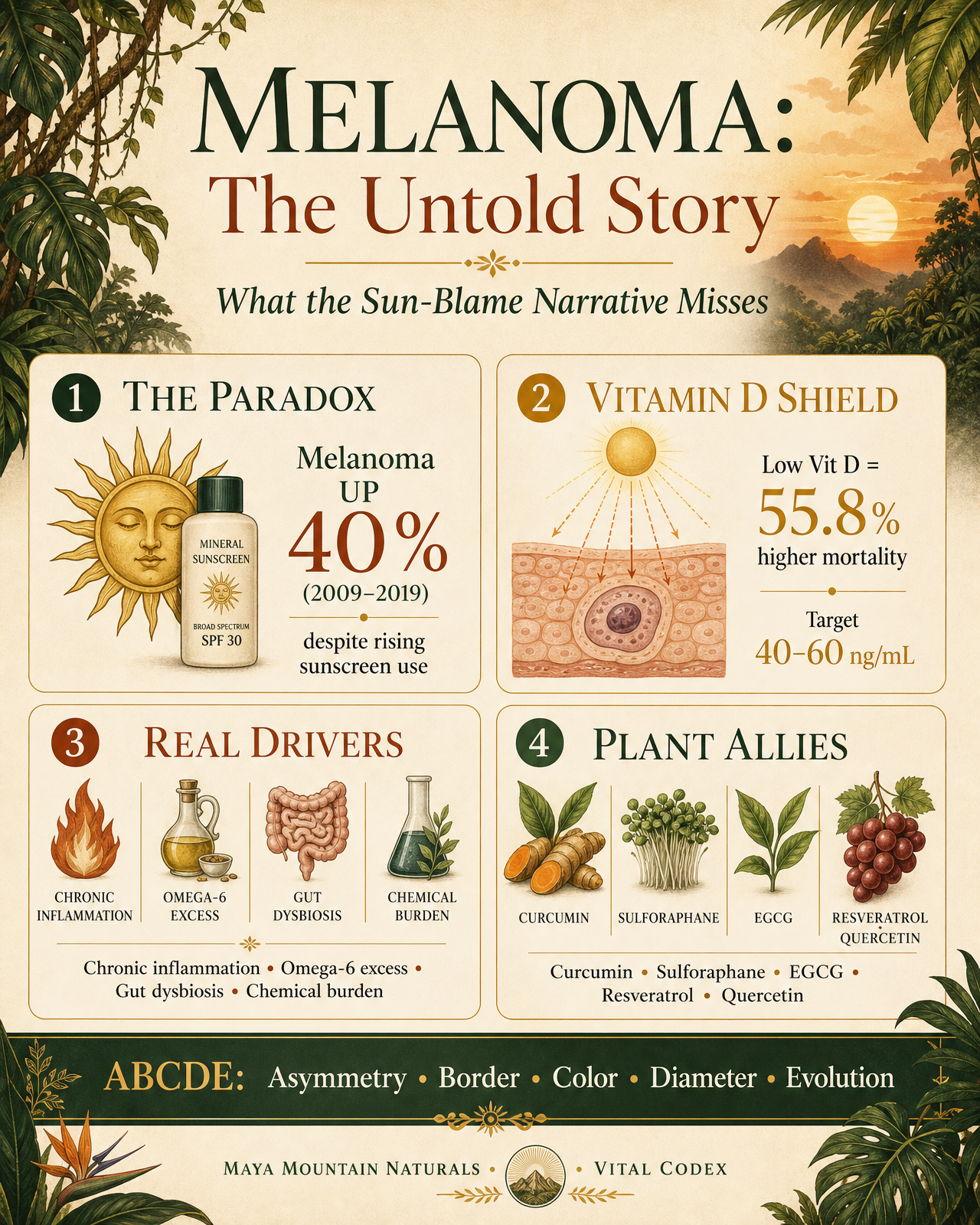
- Rates rose 40%+ between 2009 and 2019 — during the same period sunscreen use surged. The sun-alone story doesn't fit the data.
- Outdoor workers get 3–10× more UV than indoor workers but do not have higher melanoma rates. Intermittent, intense sunburn — not habitual sun — is the real UV risk.
- Vitamin D deficiency is linked to a 55.8% higher melanoma mortality. Target serum 40–60 ng/mL.
- Real drivers include chronic inflammation, omega-6/omega-3 imbalance, gut dysbiosis, and chemical exposures — not just sunlight.
- Powerful dietary allies: curcumin, sulforaphane (broccoli sprouts), quercetin, resveratrol, EGCG (green tea), lycopene, omega-3s.
- Learn the ABCDE warning signs and get an annual skin check. Early-stage melanoma has ~98% 10-year survival.
The Big Picture
Melanoma gets more press than any other skin cancer — and rightly so. It's responsible for nearly 73% of all skin cancer deaths, even though it makes up only about 1% of skin cancer cases. What doesn't get nearly as much coverage is what's really driving it — and what you can do about it starting today, without a prescription.
Here's the uncomfortable truth the conventional narrative glosses over: melanoma rates have been climbing steadily for decades, during the very same period that sunscreen use has skyrocketed. In the U.S. alone, new melanoma cases increased by over 40% between 2009 and 2019. If the sun were truly the primary villain and sunscreen were truly the hero, that trend should be going the other way.
This article digs into the real story: the metabolic and environmental drivers that mainstream messaging rarely mentions, the sunlight paradox that upends conventional advice, the extraordinary power of vitamin D, and a practical toolkit of food compounds and lifestyle strategies that science actually supports.
The Sun Blame Game — What the Data Really Says
You've been told your whole life: stay out of the sun, slather on SPF 50, and you'll be fine. But the epidemiology tells a more complicated story.
The Indoor Worker Paradox
Multiple studies — including a rigorous 2023 systematic review — have found that outdoor workers, who get three to ten times the daily UV dose of their indoor counterparts, do not have higher rates of cutaneous melanoma. A review from the FDA's own researchers confirmed that "although outdoor workers get three to ten times the annual UV dose that indoor workers get, they have similar or lower incidences of cutaneous malignant melanoma." The World Health Organization's explanation? Melanoma risk appears linked to intermittent, intense sun exposure (weekend baking, holiday sunburns) rather than steady, habitual exposure.
Chronic moderate sun exposure — the kind that also builds vitamin D — may actually be protective, while bursts of intense UV on unacclimated skin are the problem.
The Sunscreen Paradox
Some research suggests that sunscreen use, as it was practiced for most of the last five decades, may have inadvertently contributed to rising melanoma rates. Most older sunscreens blocked UVB but were largely transparent to UVA, which makes up 90–95% of the UV energy in sunlight. UVA penetrates deep into the dermis, drives oxidative stress, and promotes the DNA damage implicated in melanoma. People slathered on UVB-blocking SPF, felt protected, and stayed out longer — exposing their skin to more UVA for longer periods.
A 1993 paper in Mutation Research directly raised this hypothesis. It took until 2011 for the FDA to regulate "broad-spectrum" labeling standards. A landmark 1998 review comparing melanoma with squamous cell carcinoma across body distribution, age, social class, and latitude concluded that SCC is caused by sun exposure, but melanoma is not — melanoma disproportionately appears on sun-protected body sites and clusters in higher socioeconomic groups with more vacation travel.
The bottom line: Sensible, moderate, habitual sun exposure is not the enemy. Intermittent intense exposure and sunburn (especially in childhood) raise risk. Chronic sunlight avoidance carries its own serious cost — vitamin D deficiency.
Vitamin D — Your Skin's Internal Shield
Vitamin D is not just a nutrient. It's a steroid hormone that talks to almost every cell in your body — including your skin cells and immune cells. Its relationship with melanoma is one of the most compelling stories in cancer research today.
What the Research Shows
- A meta-analysis of 25 studies (11,000+ melanoma patients) found vitamin D deficiency was significantly more common in melanoma patients than in healthy controls — and low vitamin D correlated with deeper (higher Breslow thickness) tumors and a 55.8% higher mortality rate.
- The Leeds Melanoma Cohort (872 patients) showed that for every 20 nmol/L increase in serum vitamin D at diagnosis, relapse risk dropped significantly. Higher vitamin D was independently associated with thinner tumors and better survival.
- A 2021 Italian RCT found patients with both low vitamin D and tumors >3mm had a hazard ratio of 4.81 for recurrence — nearly five times the relapse risk of those with adequate vitamin D.
- A 2023 study associated regular vitamin D3 supplementation with significantly lower history of melanoma and other skin cancers.
How Vitamin D Protects Your Melanocytes
Active vitamin D (calcitriol) works through the Vitamin D Receptor (VDR) in melanocytes, keratinocytes, and immune cells. Once activated, it:
- Repairs UV-induced DNA damage (cyclobutane pyrimidine dimers).
- Reduces oxidative stress and chronic skin inflammation.
- Inhibits cancer cell proliferation and promotes healthy apoptosis.
- Activates tumor suppressor pathways — PTEN and p53.
- Enhances immune surveillance — boosting the T cells that hunt abnormal cells.
VDR expression inversely correlates with tumor progression. Maintaining VDR activation through adequate vitamin D keeps one of your key tumor-suppressor switches in the "on" position.
What Level Should You Aim For?
- Deficiency: below 20 ng/mL (50 nmol/L)
- Insufficiency: 20–30 ng/mL
- Functional optimum for skin protection: 30–60 ng/mL
Sensible, regular sun exposure — face, arms, and legs for 15–30 minutes at midday several times a week — can generate 1,000–10,000 IU depending on skin type, location, and season. For high latitudes, darker skin, or limited sun access, supplemental vitamin D3 (cholecalciferol) is the practical solution.
The Real Risk Factors Nobody Talks About Enough
If the sun isn't the whole story, what else is going on? The same metabolic and environmental drivers behind the broader modern cancer epidemic.
Chronic Inflammation and Oxidative Stress
Melanocytes are inherently vulnerable to oxidative damage. During melanin synthesis they generate reactive oxygen species — creating a built-in oxidative burden that UV amplifies. When this stress becomes chronic, it triggers the same cascade seen in other cancers: DNA instability, immune suppression, and activation of pro-cancer signaling (NF-κB). A diet heavy in processed meats, refined carbs, and industrial seed oils drives that inflammation and creates a tumor-promoting microenvironment for melanoma.
The Omega-6 / Omega-3 Imbalance
Most modern diets are drowning in omega-6 fats (vegetable oils, processed foods, grain-fed meat) and starved of omega-3s. Omega-6 fuels the arachidonic acid pathway, producing pro-inflammatory prostaglandins (especially PGE2) that suppress immune surveillance and accelerate tumor growth. Omega-3s (EPA and DHA) do the opposite — reducing PGE2 up to sevenfold, protecting CD8+ T cells, and suppressing melanoma proliferation in preclinical models. Higher omega-3 intake has even been linked to improved responses to cancer immunotherapy.
Gut Health and the Microbiome
The gut microbiome profoundly influences the immune surveillance that catches early malignant melanocytes. Dysbiosis, driven by ultra-processed diets, suppresses healthy immune function. Microbiomes enriched with Faecalibacterium prausnitzii and Ruminococcaceae — promoted by fiber-rich, plant-forward eating — are associated with both reduced melanoma progression and better responses to checkpoint immunotherapy.
Chemical Exposures
Workplace chemical exposure has documented correlations with melanoma occurring on body areas that have never seen sunlight. Pesticides, plastics, endocrine-disrupting compounds, heavy metals, and industrial chemicals contribute to oxidative stress and mutagenic pressure entirely independent of UV.
What to Eat — The Protective Diet
Food is a powerful lever. Here's what the research supports.
The Mediterranean Pattern
Observational data consistently link adherence to the Mediterranean diet with reduced melanoma incidence, independent of UV exposure, skin type, and physical activity. The mechanism is multi-dimensional: high polyphenol density, anti-inflammatory omega-3s, fiber-fed microbiome, and low refined sugar and processed meat.
Core pillars:
- Extra-virgin olive oil as primary fat — 4+ tablespoons daily
- Fatty fish 2–3× weekly (salmon, mackerel, sardines) — EPA and DHA
- 5+ servings of fruits and vegetables daily
- Legumes 3+ times weekly
- Minimal red or processed meat
- Whole grains over refined grains
Foods With the Strongest Evidence
| Nutrient / Food | Protective mechanism | Best sources |
|---|---|---|
| Omega-3s (EPA/DHA) | Reduce PGE2, protect immune T cells | Wild salmon, sardines, mackerel, fish oil |
| Lycopene | Neutralizes UV-induced ROS | Tomatoes, guava, watermelon, papaya |
| Beta-carotene | Photoprotection, antioxidant defense | Sweet potato, carrots, leafy greens |
| Selenium | Antioxidant enzyme cofactor, DNA repair | Brazil nuts, wild fish, eggs |
| Vitamin E | Skin cell antioxidant | Sunflower seeds, almonds, olive oil |
| Vitamin C | DNA repair, immune enhancement | Bell peppers, citrus, berries |
| Polyphenols | NF-κB inhibition, anti-inflammatory | Berries, green tea, dark chocolate |
| Dietary fiber | Microbiome health, immune modulation | Legumes, oats, vegetables, fruit |
Plant Compounds That Directly Target Melanoma Biology
A handful of specific bioactive compounds have been studied in melanoma itself and show impressive mechanisms of action.
Curcumin (Turmeric)
From Curcuma longa. In melanoma specifically, curcumin has demonstrated the ability to:
- Suppress NF-κB signaling — a master switch for inflammation and tumor survival
- Activate antioxidant enzymes (SOD, GPx) while reducing ROS in cancer cells
- Trigger apoptosis and suppress metastasis in preclinical melanoma models
- Inhibit the PI3K/Akt/mTOR pathway — a critical driver of melanoma growth
- Enhance the effectiveness of conventional chemotherapy agents
Practical tip: Pair turmeric with black pepper (piperine boosts absorption ~20×) and a fat source. Liposomal or phospholipid-complexed curcumin further improves bioavailability.
Resveratrol
From grape skins, Japanese knotweed (Polygonum cuspidatum), berries, and red wine:
- Suppresses ERK1/2 and CDK signaling driving melanoma replication
- Induces cell cycle arrest and apoptosis while sparing healthy fibroblasts
- Reduces MITF — essential for melanoma cell survival
- Shows anti-metastatic effects on melanoma cell invasion
Practical tip: Japanese knotweed standardized extracts (50% trans-resveratrol) offer a concentrated source. Diverse daily berries deliver a stilbene spectrum synergistically.
Quercetin
A flavonoid abundant in onions, capers, apples, and berries:
- Inhibits tyrosinase and melanogenesis
- Causes G1 cell cycle arrest
- Downregulates PI3K/Akt and MAPK/ERK survival pathways
- Enhances CD8+ T cell and M1 macrophage activity
- Shows synergistic effects with curcumin
Practical tip: Red onions, capers, and dark berries are rich sources. Supplements (500–1000 mg daily) are well-tolerated. Bromelain (from pineapple) may enhance absorption.
Sulforaphane (Broccoli Sprouts)
Sulforaphane works through the Nrf2 pathway — activating your body's own internal antioxidant defense:
- Activates enzymes (NQO1, HO-1, SOD) that neutralize UV-induced oxidative damage
- A phase 0 trial in melanoma survivors: topical broccoli sprout extract reduced UVB-induced redness ~40% and cut pro-inflammatory cytokines
- Inhibits HDAC enzymes (epigenetic reactivation of tumor suppressors)
- Selective cytotoxicity toward melanoma vs. healthy skin cells
Practical tip: Home-grown broccoli sprouts (pennies) contain 20–50× more sulforaphane than mature broccoli. Three-day-old sprouts have peak concentration. Chew or lightly bruise them to activate the myrosinase enzyme.
EGCG (Green Tea)
Epigallocatechin-3-gallate modulates multiple pathways at once:
- Inhibits PI3K/Akt/mTOR and MAPK pathways in melanoma
- Downregulates PD-L1 expression — restoring CD8+ T cell activity that melanoma suppresses
- Reduces glucose uptake and lipid synthesis in tumor cells
- May synergize with immune checkpoint inhibitor therapies
Practical tip: 2–4 cups of high-quality green tea daily (matcha and gyokuro are highest in EGCG). Standardized extracts (400–800 mg EGCG) reach therapeutic concentrations.
Lifestyle Foundations — The Non-Negotiables
Diet and supplements work inside a larger context. These foundations shape your melanoma risk through the same metabolic and immune pathways above.
Maintain healthy body composition. Excess adipose tissue is an active endocrine organ, secreting pro-inflammatory adipokines, elevating insulin and IGF-1, and promoting immune dysfunction — a terrain that favors cancer.
Exercise regularly. Physical activity improves insulin sensitivity, enhances immune surveillance, reduces systemic inflammation, and supports mitochondrial function — one of the most powerful anti-cancer interventions available.
Protect circadian rhythms. The WHO has classified shift work involving circadian disruption as "probably carcinogenic." Melatonin — produced in darkness — directly influences immune regulation and anti-cancer defense. Protect sleep; limit blue light after dark.
Get sensible, non-burning sun. Regular, moderate midday exposure that produces vitamin D without burning. Avoid intermittent intense exposure on unacclimated skin. If you burn easily or carry significant risk, physical protection (clothing, hat) is more reliable than chemical sunscreens — and doesn't block UVB while leaving UVA unfiltered.
Reduce chemical burden. Choose organic where possible, filter your water, avoid heated plastics, use non-toxic personal care and cleaning products.
Limit alcohol. A meta-analysis of 18 studies found a 29% increased melanoma risk among heavy drinkers, mechanistically tied to photosensitization and DNA adduct formation.
Quick Reference: Melanoma Prevention Toolkit
| Category | Priority Action |
|---|---|
| Vitamin D | Target serum 40–60 ng/mL; regular midday sun + D3 supplement if needed |
| Anti-inflammatory diet | Mediterranean pattern; reduce omega-6 oils; increase fatty fish |
| Key nutrients | Selenium, vitamin E, vitamin C, beta-carotene, lycopene, zinc |
| Protective compounds | Curcumin + black pepper, quercetin, resveratrol, sulforaphane, green tea/EGCG |
| Gut health | High-fiber, plant-rich diet; prebiotic foods; minimize processed food |
| Sun strategy | Regular moderate exposure; no burning; physical protection over chemical sunscreen |
| Lifestyle | Healthy weight, exercise, protect sleep/circadian rhythms |
| Reduce exposures | Minimize pesticides, plastics, industrial chemicals; limit alcohol |
A Note on Signs to Watch
No amount of natural strategy replaces catching melanoma early. Early-stage melanoma has a ~98% 10-year survival rate. Learn the ABCDE warning signs:
- Asymmetry — one half doesn't match the other
- Border — ragged, notched, or blurred edges
- Color — multiple shades of brown, black, red, white, or blue
- Diameter — larger than a pencil eraser (6 mm), though melanomas can be smaller
- Evolution — any mole that changes in size, shape, color, or bleeds
Get an annual full skin check — especially with fair skin, many moles, a history of sunburns, or a family history of melanoma.
Frequently asked questions
Does the sun cause melanoma?
The relationship is more nuanced than commonly claimed. Steady, habitual moderate sun exposure is not strongly linked to melanoma — outdoor workers get 3–10× more UV than indoor workers without higher melanoma rates. What raises risk is intermittent, intense sun exposure and sunburn, especially in childhood. Melanoma often appears on body sites that get little sun, which is one reason researchers describe it as a systemic disease with UV as one contributing factor, not the sole cause.
Should I stop using sunscreen?
No — but be strategic. Choose broad-spectrum mineral (zinc oxide, titanium dioxide) sunscreens that block UVA and UVB. Prioritize physical protection (clothing, hats, shade) for prolonged exposure. Never use sunscreen to justify staying in intense sun far longer than your skin is adapted for. Aim for regular, moderate, non-burning sun most days for vitamin D.
What vitamin D level should I target for melanoma prevention?
Research suggests a functional optimum of 30–60 ng/mL serum 25-hydroxyvitamin D, with 40–60 ng/mL as a practical target for skin protection. Test your level; supplement with D3 (cholecalciferol) if you're below 30 ng/mL, especially in winter or if you have darker skin or limited sun exposure.
Which foods are most protective against melanoma?
Fatty fish (salmon, sardines, mackerel) for omega-3s; extra-virgin olive oil; deeply colored fruits and vegetables (tomatoes for lycopene, sweet potato and carrots for beta-carotene, berries for polyphenols); cruciferous vegetables and broccoli sprouts for sulforaphane; green tea for EGCG; turmeric with black pepper; onions and capers for quercetin.
Can broccoli sprouts really help protect the skin?
Sulforaphane from broccoli sprouts activates the Nrf2 antioxidant pathway, and a phase 0 clinical trial in melanoma survivors found topical broccoli sprout extract reduced UVB-induced redness ~40% and lowered pro-inflammatory cytokines. Three-day-old home-grown sprouts contain 20–50× the sulforaphane of mature broccoli.
Is this article medical advice?
No. This is educational content summarizing published research. If you have a personal or family history of melanoma, unusual moles, or a skin change fitting the ABCDE criteria, see a qualified dermatologist. Discuss vitamin D testing, supplementation, and dietary changes with a practitioner familiar with your history.
---
This article is part of the Maya Mountain Naturals Vital Codex. It is educational and does not constitute medical advice. Individual health decisions should be discussed with a qualified practitioner familiar with your personal history.