Insulin Resistance: The Silent Engine of Modern Disease
Insulin resistance is the hidden metabolic disturbance driving obesity, heart disease, fatty liver, cancer, and cognitive decline — often present for decades before diagnosis. A plain-language overview of why it happens, how it's missed, and how it can be reversed.
Quick answer
- Insulin resistance means cells stop responding to insulin, so the pancreas pumps out more — quietly, for decades, before any diagnosis.
- It precedes and drives type 2 diabetes, fatty liver, heart disease, PCOS, Alzheimer's, and many cancers.
- Standard fasting glucose tests miss it; fasting insulin and HOMA-IR catch it years earlier.
- It is largely reversible with diet (lower refined carbs/seed oils), strength training, sleep, and stress reduction.
- Targeted herbs (berberine-style bitters, cinnamon, gymnema, amla) and metabolic support can speed the turnaround.
Adapted from Paul Marik, MD — "Insulin Resistance: The Silent Engine of Modern Disease." Original article: paulmarik.substack.com.
The Disease You Don''t Know You Have
A patient walks into a clinic with "normal" blood work. Fasting glucose is fine. HbA1c is reassuring. Cholesterol — borderline, but acceptable.
And yet, beneath this veneer of normality, a pathological process has already taken hold — quietly, invisibly, relentlessly.
That process is insulin resistance.
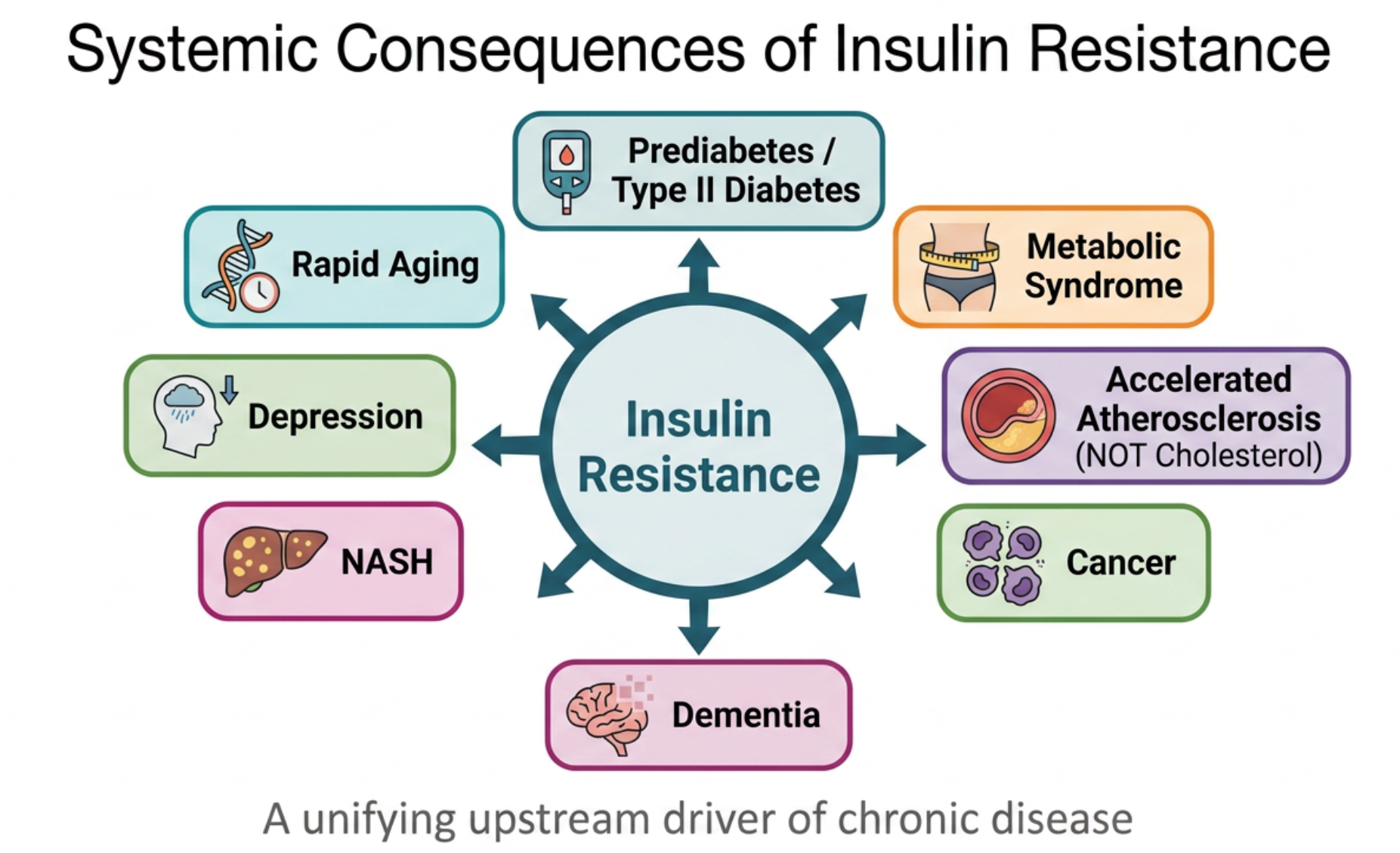
It is not simply a precursor to diabetes. It is the central metabolic disturbance of modern chronic disease — the common thread linking obesity, cardiovascular disease, fatty liver disease, cancer, and even neurodegenerative disorders.
By the time it is diagnosed, it has often been present for years — if not decades.
What Is Insulin Resistance?
At its core, insulin resistance is a failure of the body''s cells to respond appropriately to insulin.
Under normal physiology, insulin:
- Facilitates glucose uptake into muscle and fat
- Suppresses glucose production by the liver
- Promotes energy storage
In insulin resistance:
- Cells become less responsive to insulin
- The pancreas compensates by producing more insulin (hyperinsulinemia)
- Blood glucose may remain normal — for years
This is a critical point: insulin resistance is fundamentally a disease of elevated insulin — not elevated glucose. Glucose rises late. Insulin rises early.
The Evolutionary Mismatch
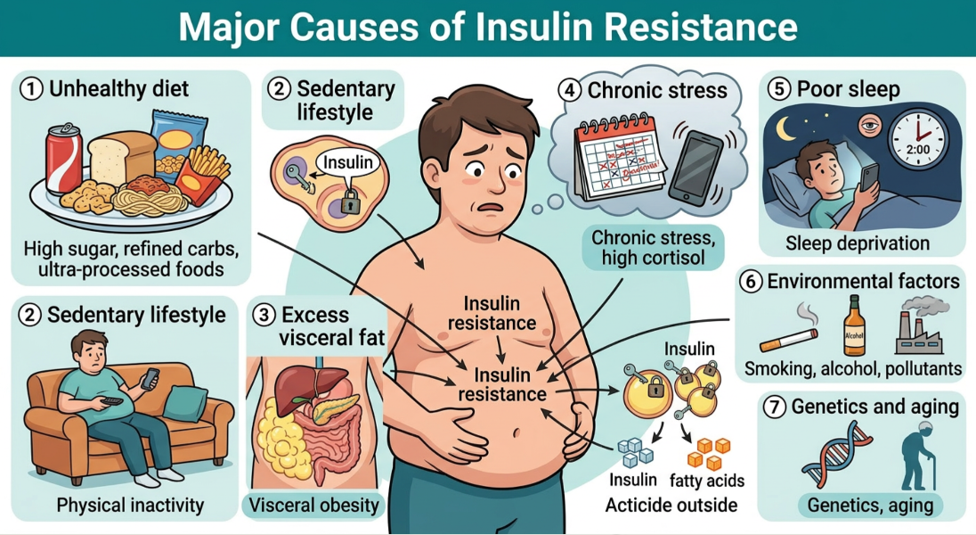
Insulin resistance is not a random failure — it is a predictable consequence of modern lifestyle.
Human metabolism evolved in an environment of intermittent food, low glycemic load, and high physical activity. The modern environment delivers continuous caloric intake, refined carbohydrates and fructose, and sedentary behavior.
The result is chronic metabolic overload.
A Multi-Axis Metabolic Failure
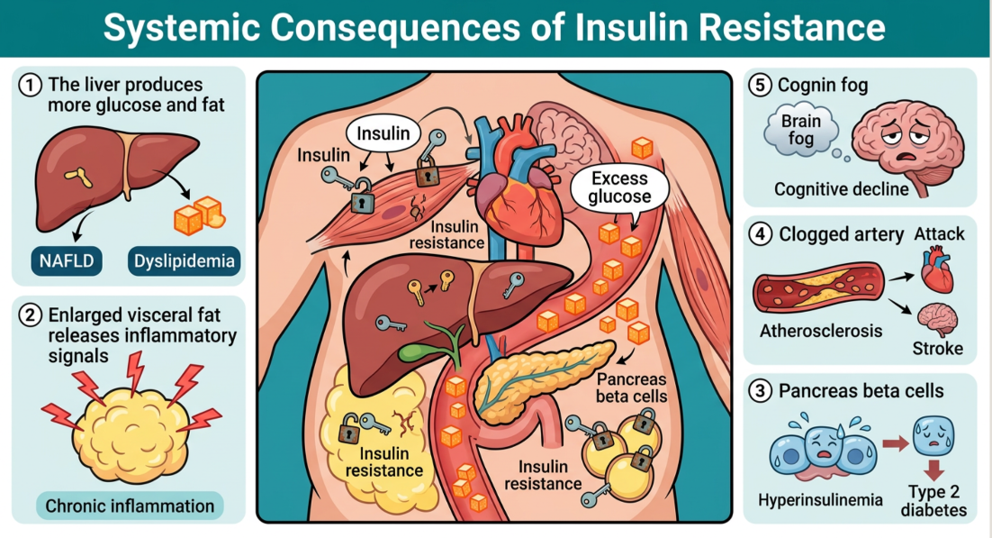
Insulin resistance is not a single defect — it is a systems-level breakdown involving multiple metabolic axes.
1. Glycolytic Overload
Excess carbohydrate intake drives persistent hyperglycemia, chronic insulin secretion, and increased flux through glycolysis — overwhelming normal pathways and promoting fat synthesis.
2. Mitochondrial Dysfunction
Mitochondria become unable to efficiently oxidize fuel, producing more reactive oxygen species and creating an energy mismatch within cells. This leads to metabolic inflexibility — the inability to switch between fuel sources.
3. Lipotoxicity
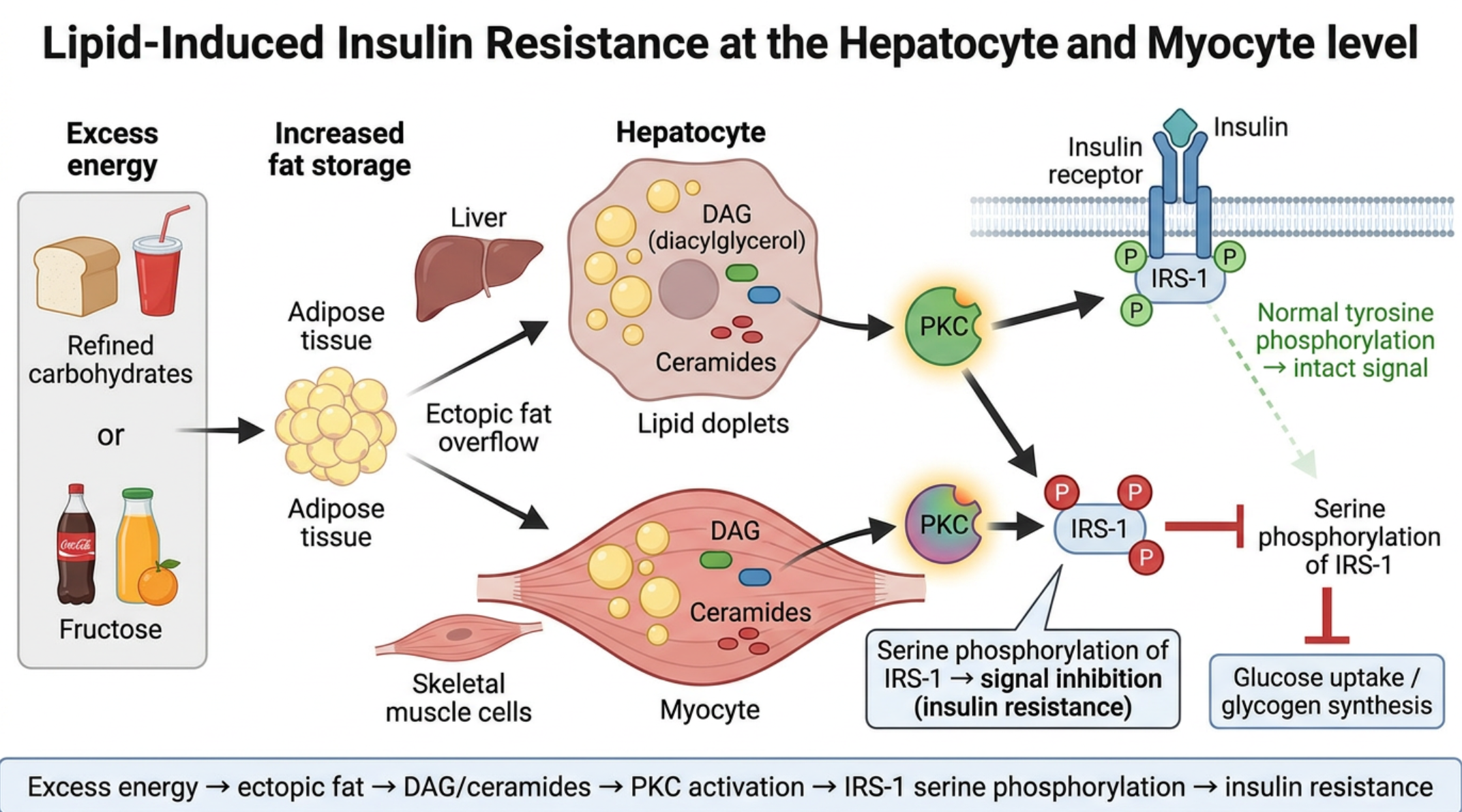
When fat tissue becomes saturated, lipids accumulate in liver and muscle. Toxic intermediates like ceramides and diacylglycerol directly interfere with insulin receptor function.
4. Chronic Inflammation
Adipose tissue becomes metabolically active — macrophage infiltration and cytokine release (TNF-α, IL-6) create systemic low-grade inflammation that disrupts insulin signaling.
5. Hormonal Dysregulation
Hyperinsulinemia suppresses fat burning, disrupts leptin signaling (promoting hunger), and activates the sympathetic nervous system — creating a self-reinforcing cycle.
Fructose: A Key Driver
Among dietary factors, fructose plays a uniquely harmful role. Unlike glucose, fructose is:
- Primarily metabolized in the liver
- Rapidly converted into fat (de novo lipogenesis)
- Not regulated by insulin
The consequences include hepatic fat accumulation (NAFLD/NASH), increased uric acid (mitochondrial stress), and worsening insulin resistance.
Fructose accelerates insulin resistance even in the absence of excess calories. This is why sugar-sweetened beverages are particularly harmful.
Clinical Manifestations: The Tip of the Iceberg
Insulin resistance does not present as a single disease — it manifests across multiple organ systems.
- Metabolic: Type 2 diabetes, visceral obesity, nonalcoholic fatty liver disease
- Cardiovascular: Hypertension, atherosclerosis, coronary artery disease
- Endocrine: Polycystic ovary syndrome (PCOS)
- Oncologic: Increased risk of breast, colon, and pancreatic cancer
- Neurologic: Cognitive decline and Alzheimer''s disease ("type 3 diabetes")
Why We Miss It
Modern medicine is largely focused on late-stage markers like glucose and HbA1c. But these are downstream effects.
Early insulin resistance is better detected by:
- Fasting insulin
- HOMA-IR
- Triglyceride/HDL ratio
Yet these are rarely measured. We are diagnosing a disease years after it begins.
The Vicious Cycle
Insulin resistance is self-perpetuating:
- High insulin → fat storage
- Increased fat → inflammation and lipotoxicity
- Worsened insulin resistance → higher insulin
This cycle continues until β-cell failure occurs, blood glucose rises, and diabetes is diagnosed. By that point, the disease is already advanced.
Why the Insulin Receptor Becomes "Resistant"
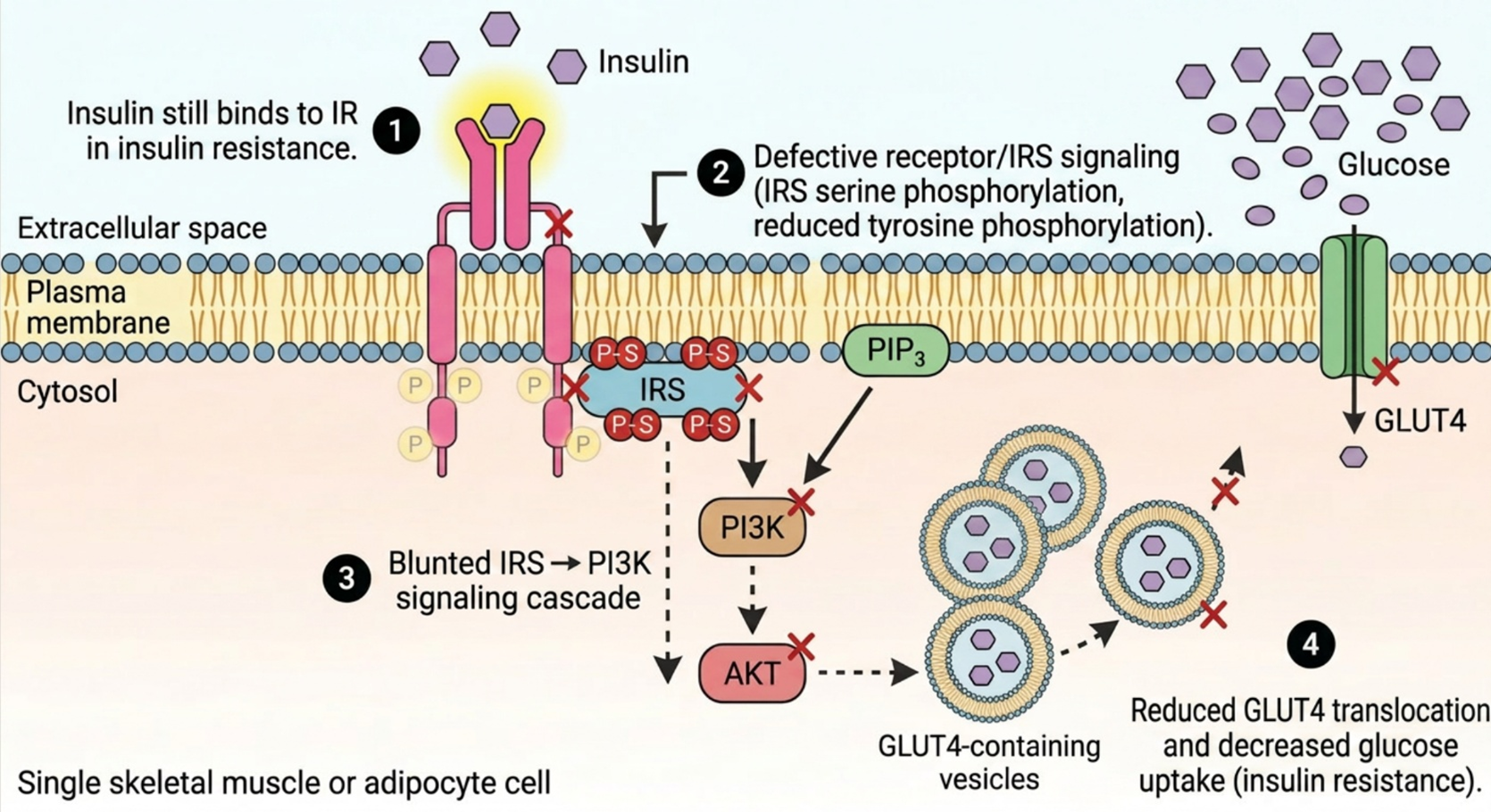
It''s not that insulin stops binding — the signal gets blocked downstream.
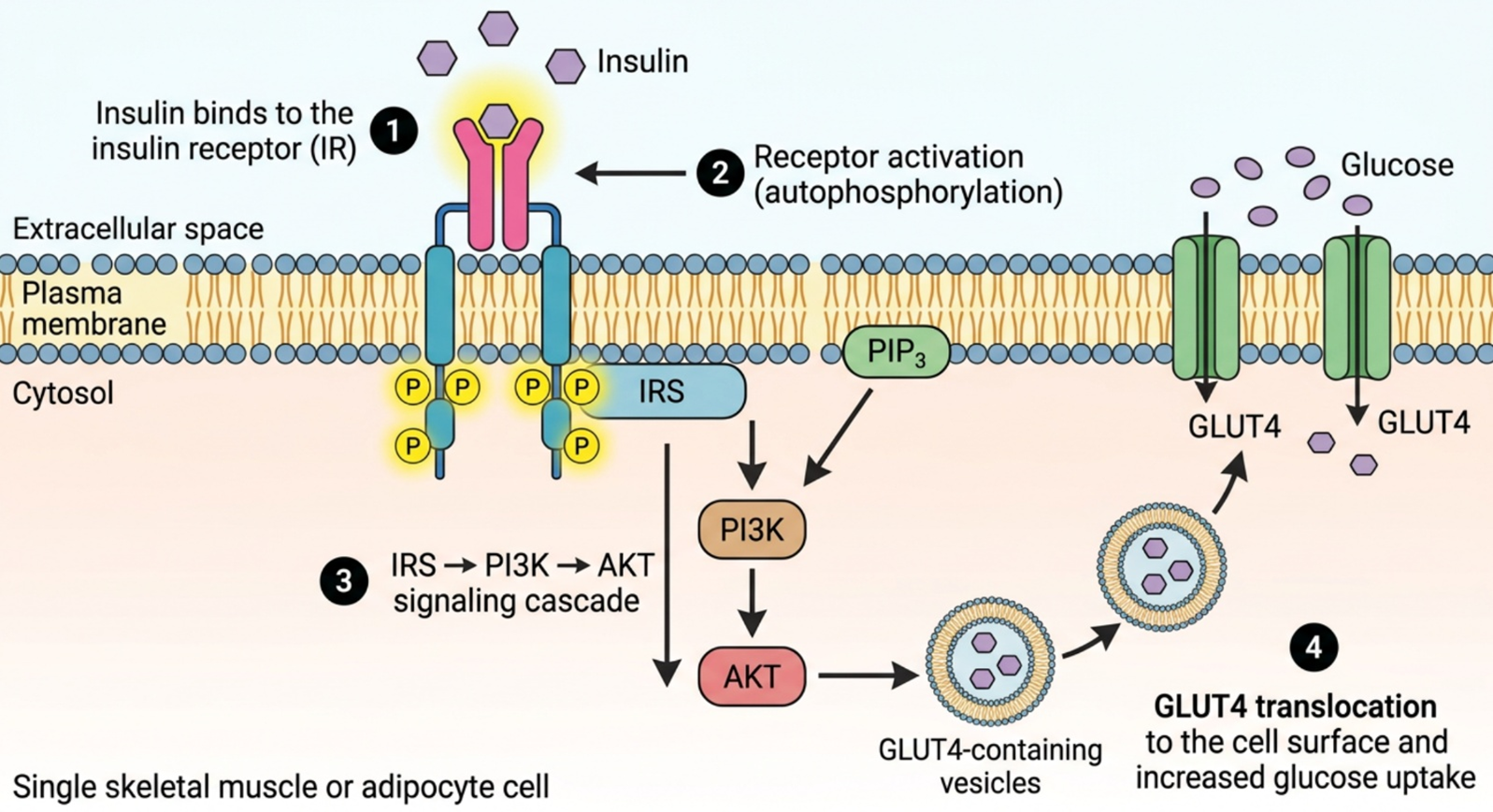
Under normal conditions, insulin binds the receptor, the receptor activates, a signaling cascade (IRS → PI3K → AKT) is triggered, and glucose transporters move to the cell surface.
In insulin resistance, insulin still binds and the receptor may still activate — but the signal is disrupted inside the cell.
The problem is not the key — it''s the wiring inside the lock.
Core Mechanisms
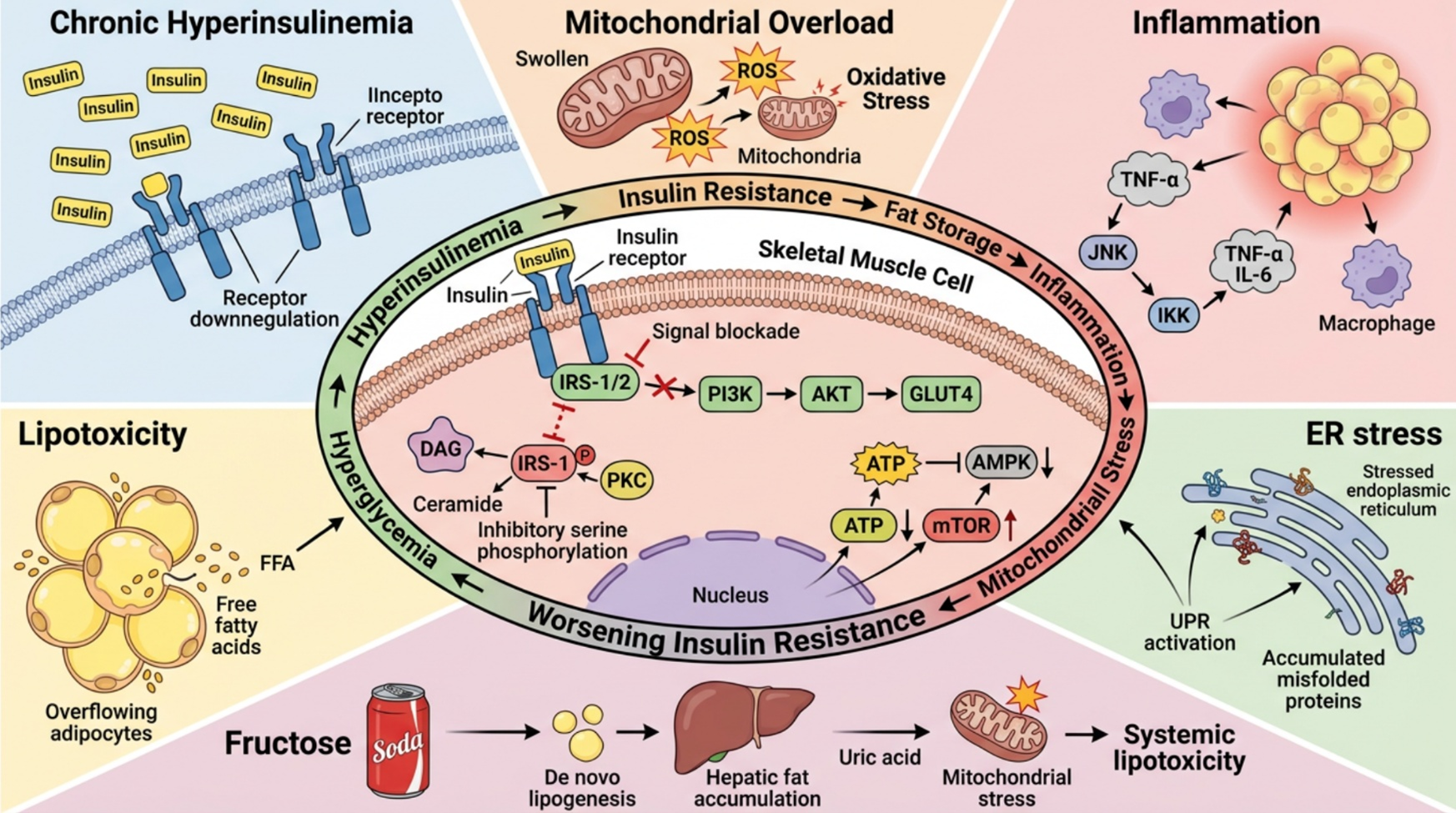
- Chronic hyperinsulinemia → receptor downregulation. Constant stimulation desensitizes cells.
- Lipotoxicity (the dominant driver). Toxic lipid intermediates (DAG, ceramides) activate PKC and block insulin signaling at the IRS level — replacing normal tyrosine phosphorylation with inhibitory serine phosphorylation. The signal is actively "jammed" inside the cell.
- Mitochondrial overload. Excess glucose + fatty acids exceed oxidative capacity, generating reactive oxygen species that damage and impair insulin signaling.
- Cytokine-mediated disruption. TNF-α and IL-6 activate stress kinases (JNK, IKKβ) that promote inhibitory phosphorylation of IRS proteins.
- Endoplasmic reticulum stress. Excess nutrient load stresses protein-folding systems, triggering inflammatory signaling.
- An "energy surplus" signal. At a deeper level, insulin resistance is partly a protective response — the cell senses excess ATP and nutrients and shuts the door.
A Simple Analogy
Think of the cell as a room:
- Insulin is knocking on the door
- But the room is already full
So the cell locks the door (receptor downregulation), blocks the hallway (IRS inhibition), and turns off the lights (mitochondrial suppression).
A Systems Disease Requires a Systems Solution
Treating insulin resistance requires addressing root causes — not just symptoms.
1. Dietary Intervention
- Low glycemic, whole-food diet
- Eliminate refined carbohydrates and sugars
- Reduce fructose intake
Even modest carbohydrate restriction can dramatically reduce insulin levels.
2. Intermittent Fasting
Fasting reduces insulin levels, promotes fat oxidation, and improves mitochondrial function — restoring metabolic flexibility.
3. Physical Activity
Exercise increases insulin sensitivity, enhances glucose uptake independent of insulin, and improves mitochondrial efficiency.
4. Sleep and Circadian Health
Sleep deprivation increases insulin resistance and disrupts hormonal regulation. Circadian alignment is essential.
5. Targeted Pharmacology and Nutraceuticals
Agents that improve insulin sensitivity include metformin, berberine, omega-3 fatty acids, and magnesium — acting across multiple metabolic axes.
Reframing the Disease
Insulin resistance is not just a metabolic abnormality. It is:
- A disease of energy handling
- A disease of modern lifestyle
- A driver of nearly every chronic illness
And most importantly: it is reversible.
The Clinical Imperative
If we continue to focus on glucose alone, we will continue to miss the disease. The future of medicine lies in recognizing early metabolic dysfunction, the central role of insulin, and the interconnected nature of chronic disease.
Bottom Line
The insulin receptor doesn''t just "fail." It is overwhelmed, downregulated, and biochemically blocked by lipid toxicity, oxidative stress, and inflammatory signaling.
Insulin resistance is not a disease of deficiency. It is a disease of excess and overload.
We are facing an epidemic — not of isolated diseases, but of a single underlying metabolic disorder manifesting in different forms.
Insulin resistance is the engine. Everything else is downstream.
If you want to understand modern disease, start with insulin. If you want to reverse it, start with metabolism. And if you want to change outcomes — not just manage symptoms — you must intervene early, decisively, and systemically.
---
Source: Paul Marik, MD — Cancer & Metabolic Healing. Read the original at paulmarik.substack.com.
Frequently Asked Questions
Frequently asked questions
What is insulin resistance in simple terms?
Your cells stop opening their doors to insulin, the hormone that ushers sugar out of the blood. The pancreas compensates by making more insulin, and over time both insulin and blood sugar drift higher.
How do I know if I have insulin resistance?
Ask your doctor for a fasting insulin test alongside fasting glucose, then calculate HOMA-IR. A waist measurement larger than half your height, skin tags, dark patches behind the neck, and afternoon energy crashes are common early clues.
Can insulin resistance be reversed?
Yes, in most cases. Lower refined carbohydrates and industrial seed oils, eat protein-forward meals, walk after eating, lift weights twice a week, and protect sleep. Most people see meaningful changes in 8–12 weeks.
Is keto the only way to fix insulin resistance?
No. Strict keto can speed reversal but is not required. A whole-food diet that controls refined carbs and stops constant snacking works for most people.
Which herbs help with insulin sensitivity?
Traditionally used herbs include cinnamon, gymnema, fenugreek, amla, bitter melon, and berberine-containing bitters. They are supportive, not a substitute for diet, movement, and sleep.
Does insulin resistance cause weight gain or vice versa?
It runs both ways. High insulin tells the body to store fat and resist burning it, and excess visceral fat further worsens insulin signaling. Breaking the loop usually requires lowering insulin first.