Glutathione: Your Body's Master Antioxidant & Detox Molecule
Glutathione is your body's "master antioxidant" — a tripeptide made inside every cell that neutralizes free radicals, powers liver detox, and supports immunity. Here's what it does, why levels fall with age, and how to support it naturally.
Maya Mountain Naturals Editorial · Published June 2026 · 13 min read
Quick answer
- Glutathione (GSH) is a tiny tripeptide molecule your body makes inside virtually every cell from three amino acids — cysteine, glycine, and glutamate — and it's often called your "master antioxidant."
- It works inside the cell, neutralizing free radicals, recycling vitamins C and E, escorting toxins out through the liver, and regulating immune function.
- Levels decline steadily with age — by your 60s and 70s you may have less than half the glutathione you had in your 20s, a decline linked to most major chronic-disease patterns of aging.
- You can support it through sulfur-rich foods, quality protein, B6/B12, and herbs like milk thistle, turmeric, and alpha-lipoic acid.
- The best-studied supplemental routes are precursors (NAC and GlyNAC) for daily support, with liposomal glutathione for faster, targeted replenishment.
If you've spent any time researching natural health, detox protocols, or anti-aging strategies, you've probably seen the word glutathione pop up everywhere. Supplement companies love it. Integrative doctors swear by it. And honestly? The science behind it earns a lot of that hype.
But what is glutathione, exactly? And should you be paying attention to it for your own health?
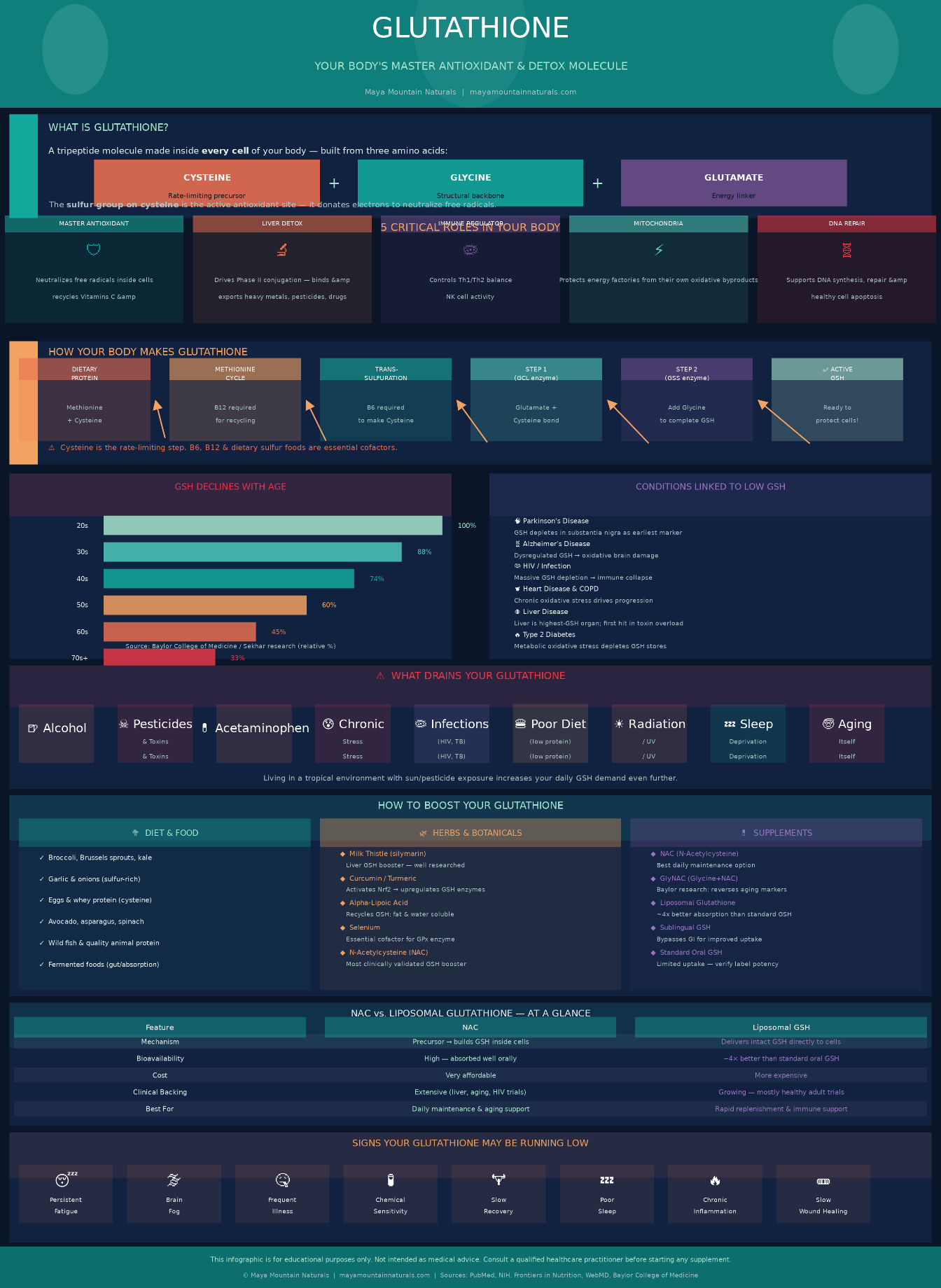
Here's the short version: glutathione (pronounced gloo-ta-THY-one, often shortened to GSH) is a tiny tripeptide molecule that your body produces inside virtually every single cell. It's made from three amino acids — cysteine, glycine, and glutamate — and it's arguably the most important protective molecule your body knows how to make.
Researchers have called it the "master antioxidant" for good reason. While vitamins C and E and various herbal antioxidants work hard doing their jobs from outside the cell, glutathione works inside the cell — right at the place where oxidative damage actually happens. It neutralizes free radicals, recycles other antioxidants, escorts toxins out of your body, and plays an absolutely central role in how well your immune system functions.
And here's the kicker: after about age 20, your body starts making less and less of it. By the time you're 60 or 70, your glutathione levels may be dramatically lower than they were when you were young — and a growing body of research connects that decline to virtually every major chronic disease pattern we see in aging populations.
Let's break it all down.
The Chemistry (Made Simple)
Glutathione's full chemical name is γ-L-glutamyl-L-cysteinylglycine. Don't worry about memorizing that — just know that it's a tripeptide, meaning it's built from three amino acid building blocks joined together in a specific way.
What makes GSH special at the chemistry level is a sulfur-containing thiol group on the cysteine component. That thiol group (-SH) is the active site — it's what allows glutathione to donate electrons to neutralize harmful free radicals and reactive oxygen species (ROS).
GSH exists in two forms in the body:
- Reduced glutathione (GSH): The active, powerful antioxidant form. This is what you want high levels of.
- Oxidized glutathione (GSSG): What GSH becomes after it "spends itself" neutralizing a free radical. The body can recycle GSSG back to GSH using an enzyme called glutathione reductase — but this recycling process requires energy and nutrients like selenium and riboflavin.
A healthy cell maintains a high GSH-to-GSSG ratio. When that ratio drops — meaning oxidized glutathione starts accumulating — it's a sign the cell is under significant oxidative stress.
How Your Body Makes Glutathione
Your body synthesizes glutathione through a beautifully coordinated two-step enzymatic process that happens right inside the cytosol (the fluid interior) of cells.
Step 1 — Gamma-Glutamylcysteine Formation: The enzyme glutamate-cysteine ligase (GCL) bonds glutamate and cysteine together. This is the rate-limiting step — the slowest, most regulated step in the entire process, and where most of the control over how much glutathione you make actually happens.
Step 2 — Glutathione Assembly: The enzyme glutathione synthetase (GSS) then adds glycine to the intermediate dipeptide, completing the full glutathione molecule.
The Upstream Pathway: Where Cysteine Comes From
This is where things get really interesting from a nutritional perspective. Cysteine is almost always the limiting factor in GSH production — meaning your body can only make as much glutathione as you have cysteine available.
But cysteine doesn't just come straight from food. Your body also manufactures it through a sophisticated upstream pathway: methionine (from protein-rich foods) is converted to S-adenosylmethionine (SAM), which eventually generates homocysteine. Homocysteine needs vitamin B12 to be recycled and vitamin B6 to enter the transsulfuration pathway that ultimately produces cysteine — which then feeds directly into glutathione synthesis.
What this means practically: if you're deficient in B6, B12, or folate — all extremely common in people under chronic stress, with poor diets, or who drink alcohol regularly — your entire glutathione production line slows down, even if you're taking glutathione supplements. This is why comprehensive nutritional support matters.
What Glutathione Actually Does in Your Body
Glutathione wears many hats. Here are its major roles.
1. Master Antioxidant and Free Radical Neutralizer
Every moment your cells produce energy through mitochondria, they also generate free radicals as a byproduct — similar to how a car engine produces exhaust. These reactive oxygen species (ROS) are normal in small amounts, but when they overwhelm your antioxidant defenses, they damage cell membranes, proteins, fats, and DNA in a process called oxidative stress.
Glutathione is the primary intracellular defender against this damage. It directly neutralizes hydrogen peroxide, lipid peroxides, and other reactive species — and critically, it also recycles other antioxidants like vitamins C and E back to their active forms, essentially extending their protective lifespan.
2. The Body's Primary Detox Molecule
Your liver is the primary detox organ, and glutathione is its most important tool. In what biochemists call Phase II conjugation, glutathione binds to toxic compounds (heavy metals, pesticides, industrial chemicals, pharmaceutical drugs, and alcohol metabolites) and converts them into water-soluble compounds that can be safely excreted through bile and urine.
This is not a metaphorical "detox." It's a specific, documented, enzyme-driven biochemical process. Without adequate glutathione, these toxic compounds can't be properly processed — they either recirculate in the body or cause direct cellular damage. Research has shown that people with non-alcoholic fatty liver disease who supplemented with oral glutathione for four months had improved liver enzyme markers.
3. Immune System Regulator
The connection between glutathione and immune function is one of the most compelling areas of GSH research:
- Glutathione levels inside lymphocytes (white blood cells) directly influence how well those cells can mount an immune response.
- GSH levels in antigen-presenting cells help determine whether the immune system produces a Th1 (cell-mediated, anti-infection) or Th2 (antibody-mediated) response. Low glutathione skews this balance in ways that impair your ability to fight pathogens.
- In HIV research, glutathione deficiency is consistently documented and correlates with faster disease progression; adequate GSH has been shown to slow CD4+ T-cell decline.
- T-cells replenished with glutathione are better able to inhibit the growth of Mycobacterium tuberculosis.
Put simply: your immune system runs better when your glutathione levels are adequate.
4. Mitochondrial Protector
Mitochondria — your cellular energy factories — are both the primary producers and the primary targets of free radical damage. They rely on glutathione to neutralize the oxidative byproducts of energy production and to protect their membranes and DNA. When mitochondrial glutathione depletes, function deteriorates — showing up as fatigue, brain fog, muscle weakness, and the general low-grade decline we tend to attribute to "just getting older."
5. DNA Synthesis, Repair, and Cell Health
Glutathione plays active roles in DNA synthesis and repair, cell differentiation, and the regulation of apoptosis (programmed cell death). This is one reason chronically low GSH levels have been associated with increased cancer risk — cells that can't repair DNA damage or regulate apoptosis correctly are cells that can become dangerous.
The Age Problem: Why You're Almost Certainly Running Low
Here's the reality check: glutathione levels decline consistently and measurably with age, and the research connecting this decline to most major chronic diseases is genuinely robust.
A landmark study found that, compared to younger adults, older humans have severe glutathione deficiency caused by decreased synthesis — specifically because of limited availability of glycine and cysteine. When researchers supplemented them with glycine and NAC for just two weeks, it corrected their intracellular deficiency and normalized synthesis rates.
Dr. Rajagopal Sekhar and his team at Baylor College of Medicine ran a clinical trial giving older adults (ages 70–80) a supplement called GlyNAC — a combination of glycine and N-acetylcysteine — for 24 weeks. The results were striking: glutathione deficiency was corrected, oxidative stress and inflammation markers normalized, mitochondrial function improved, insulin resistance improved, muscle strength increased, cognition improved, and gait speed and exercise capacity improved. When supplementation stopped, the benefits began reversing within 12 weeks — strongly suggesting that ongoing glutathione support is needed as we age, not just a one-time fix.
Glutathione and Specific Health Conditions
Neurological health: The brain is particularly vulnerable to oxidative damage. A decrease in GSH in the substantia nigra is considered one of the earliest detectable biochemical changes in Parkinson's disease, and dysregulation of glutathione has been consistently implicated in Alzheimer's progression. Because glutathione doesn't cross the blood-brain barrier intact, precursor strategies (NAC, glycine) or liposomal delivery matter for supporting brain GSH.
Liver health: The liver contains the highest concentration of glutathione of any organ — fitting, since it's the primary site of detoxification. Chronic liver conditions including fatty liver disease, hepatitis, and alcohol-related damage all involve GSH depletion.
Metabolic and chronic disease: Reduced glutathione metabolism has been linked to type 2 diabetes, cardiovascular disease, COPD, and chronic inflammatory conditions — largely through the chronic oxidative stress and low-grade inflammation that low GSH allows.
What Depletes Your Glutathione
Many people are unknowingly draining their GSH stores every day:
- Alcohol — directly depletes hepatic glutathione and impairs synthesis
- Chronic stress — drives up oxidative load and burns through reserves
- Poor diet — especially low-protein diets lacking sulfur amino acids
- Environmental toxins — pesticides, heavy metals, and pollution all consume glutathione for detox
- Pharmaceutical medications — acetaminophen (Tylenol) is the classic example; high doses can overwhelm GSH stores
- Chronic infection and inflammation — HIV, tuberculosis, and other infections actively deplete GSH
- Aging itself — the enzymatic machinery for synthesis declines
- Nutritional deficiencies — especially B6, B12, selenium, and protein
- Radiation, sleep deprivation, and overtraining
If you live in a tropical environment with high pesticide exposure in food, strong sun-related oxidative stress, and variable access to consistently high-quality nutrition — sound familiar? — your baseline GSH demand is already elevated.
How to Support Your Glutathione Levels
Dietary Approaches
Your body doesn't absorb glutathione well directly from food, but foods rich in sulfur-containing amino acids and precursors meaningfully support your own production:
- Sulfur-rich foods: Garlic, onions, leeks, shallots, and cruciferous vegetables (broccoli, Brussels sprouts, kale, cauliflower)
- Protein sources: Eggs and whey protein, wild fish, quality animal protein — they supply cysteine and methionine
- Avocados, asparagus, and spinach — among the foods with measurable glutathione content
- Fermented foods — support gut health and nutrient absorption, improving overall synthesis capacity
Herbal and Botanical Support
- Milk thistle (silymarin): One of the best-studied liver-protective herbs, specifically documented to boost glutathione levels and activity in the liver.
- Turmeric/curcumin: Activates the Nrf2 pathway, which upregulates your own antioxidant enzymes including glutathione peroxidase.
- Alpha-lipoic acid: A powerful antioxidant that both recycles glutathione and boosts its production; unique in being both water- and fat-soluble.
- Selenium: Essential cofactor for glutathione peroxidase (GPx). Without selenium, glutathione can't do its job efficiently.
Key Supplements
N-Acetylcysteine (NAC): Arguably the most clinically validated glutathione booster available. NAC is a stabilized form of cysteine that enters cells easily and quickly converts to the cysteine needed for GSH synthesis. It's inexpensive, well-studied, and well-tolerated, with research doses typically ranging from 600–1,800 mg/day.
GlyNAC (Glycine + NAC): The Baylor research elevated this combination to one of the more impressive anti-aging protocols studied to date. Glycine addresses the glycine deficiency that also develops with aging, so GlyNAC tackles both rate-limiting precursors at once.
Direct glutathione: Standard oral glutathione has questionable bioavailability, but newer research is more nuanced — a 6-month trial found even standard oral glutathione raised blood levels 30–35%. Liposomal glutathione (GSH encapsulated in phospholipid bubbles) shows significantly superior absorption, and a 2026 randomized crossover trial found micellar liposomal glutathione produced roughly 2.5x higher systemic exposure than standard glutathione. Sublingual forms also improve absorption.
NAC vs. Liposomal Glutathione — At a Glance
| Feature | NAC | Liposomal GSH |
|---|---|---|
| Mechanism | Precursor → builds GSH inside cells | Delivers intact GSH to cells |
| Bioavailability | High (well absorbed orally) | Significantly better than standard GSH |
| Cost | Very affordable | More expensive |
| Clinical backing | Extensive | Growing; mostly healthy-adult trials |
| Best for | Daily maintenance, aging support | Rapid replenishment, immune support |
Most integrative practitioners recommend NAC or GlyNAC as the foundation for daily support, with liposomal GSH used for accelerated or targeted replenishment.
What the Research Doesn't Yet Confirm
Honest knowledge keeps both sides in view:
- Skin lightening via oral glutathione: Popular in some markets, but the evidence for oral glutathione as a skin-lightening agent is limited.
- Long-term outcomes: Most human GSH trials are short (1–6 months) in healthy adults; we don't yet have large, long-term trials proving supplementation prevents specific diseases.
- Optimal dosing: No universally agreed therapeutic dose exists — trials range widely from 100 to 1,000+ mg/day depending on form and goal.
- Supplement quality: Independent testing has found some glutathione products contain far less than their labels claim. Third-party-tested brands matter.
Signs Your Glutathione May Be Running Low
Common signs associated with glutathione deficiency in the research literature include persistent fatigue that sleep doesn't resolve, brain fog and memory issues, frequent illness or slow recovery from infections, chemical sensitivities, slow recovery after exercise, poor sleep quality, generalized inflammation, dull or slow-healing skin, and unusual sensitivity to alcohol or medications. These don't diagnose deficiency on their own, but they're consistent with the oxidative stress and immune dysregulation that low GSH produces.
The Bottom Line
Glutathione is genuinely remarkable — and the science behind it deserves your attention. It's your body's primary internal defense system against the oxidative damage, toxic burden, and cellular deterioration that underlie much of what we call "aging."
The practical takeaway: you don't need expensive proprietary supplements to start supporting your glutathione. Eat more sulfur-rich vegetables. Get quality protein. Make sure your B vitamins — especially B6 and B12 — are dialed in. Reduce alcohol. Consider NAC as an affordable, evidence-backed daily option. And if you want more targeted support, liposomal glutathione from a quality, third-party-tested source has the best current evidence for absorption.
Your cells are making glutathione right now — or trying to. Give them the raw materials and the biochemical support to do it well.
Frequently Asked Questions
Frequently asked questions
What is glutathione?
Glutathione (GSH) is a tripeptide molecule your body makes inside nearly every cell from three amino acids — cysteine, glycine, and glutamate. It's often called the "master antioxidant" because it neutralizes free radicals directly inside cells, recycles other antioxidants, and helps the liver process toxins.
Why do glutathione levels matter as I age?
Your body's glutathione production declines steadily after about age 20, and by your 60s–70s levels may be less than half of what they were in your 20s. This decline is linked to the oxidative stress and inflammation behind many chronic conditions of aging.
What's the best way to raise glutathione — pills or precursors?
For daily support, precursors like NAC and GlyNAC have the most clinical evidence and the best value. For faster, targeted replenishment, liposomal glutathione has the strongest absorption data. Standard oral glutathione has more limited bioavailability.
Which foods support glutathione?
Sulfur-rich foods (garlic, onions, cruciferous vegetables), quality protein (eggs, whey, fish), and avocado, asparagus, and spinach all support your body's own production. Adequate B6, B12, and selenium are important cofactors.
What drains glutathione the fastest?
Alcohol, chronic stress, poor low-protein diets, environmental toxins and pesticides, certain medications like high-dose acetaminophen, chronic infection, and aging itself all deplete glutathione.
Does glutathione cross into the brain?
Intact glutathione doesn't cross the blood-brain barrier well, which is why precursor strategies (NAC, glycine) and liposomal delivery are used to support brain glutathione levels.
Is glutathione supplementation safe?
Glutathione and its precursors are generally well tolerated in studies, but quality varies between brands and optimal dosing isn't settled. This information is educational only — talk with a qualified health professional before starting any supplement, especially if you're pregnant, breastfeeding, or managing a health condition.
This article is for educational purposes only and is not intended as medical advice. Always consult a qualified healthcare practitioner before beginning any new supplement protocol, particularly if you have existing health conditions or take medications.