Garlic: Nature's Original Antibiotic
Why a humble pantry bulb is back in focus as antibiotic resistance soars — how garlic's allicin fights bacteria through four mechanisms at once, the 2026 fat-brain-muscle S1PC discovery, raw versus aged garlic extract, and how to use it for real benefit.
Maya Mountain Naturals Editorial · Updated July 2026 · 16 min read
Quick answer
- Garlic (Allium sativum) is one of the most studied natural antimicrobials, and its relevance is surging as the WHO's 2025 report finds one in six bacterial infections is now drug-resistant.
- When crushed, garlic produces allicin, which cascades into organosulfur compounds that attack bacteria through four mechanisms at once — making resistance far harder to develop than against single-target drugs.
- Clinical trials show garlic outperforming metronidazole for bacterial vaginosis, inhibiting all 30 MRSA strains tested, and acting comparably to last-resort antibiotics against resistant pathogens.
- A 2026 Cell Metabolism study revealed aged garlic's S1PC compound activates a fat → brain → muscle signaling pathway that boosts NAD⁺ and supports muscle strength in aging.
- The 10-minute rule matters: crush garlic and let it rest 10 minutes before eating or cooking to preserve up to 4x more allicin.
Here's something that should make you think twice the next time you're handed a prescription: the World Health Organization's 2025 antibiotic resistance surveillance report — the most comprehensive ever released, drawing on over 23 million confirmed infections from 110 countries — found that one in six bacterial infections in 2023 was already drug-resistant. Between 2018 and 2023, over 40% of standard antibiotics lost effectiveness against common infections of the bloodstream, gut, urinary tract, and sexually transmitted infections. The WHO now projects antimicrobial resistance deaths will rise by 70% by 2050 — surpassing HIV/AIDS and malaria combined.
Meanwhile, sitting quietly in your pantry — as it has for the last ten thousand years — is a small, papery bulb that bacteria have never managed to fully outsmart. And in 2026, science revealed it does something even more extraordinary than fighting infections. It talks to your fat cells, which then talk to your brain, which then tells your muscles to stay strong. But we'll get to that. First, let's understand what makes garlic so remarkable as a medicine.
Why Garlic Works Differently Than Any Drug
Understanding garlic as medicine starts with its chemistry. When you crush or chop a garlic clove, a near-instant biochemical reaction takes place: an enzyme called alliinase (stored in the cell vacuoles) suddenly contacts its substrate alliin (stored in the cytosol). Within seconds, this collision produces allicin — a highly reactive thiosulfinate compound responsible for that sharp, pungent smell and the plant's extraordinary antimicrobial power.
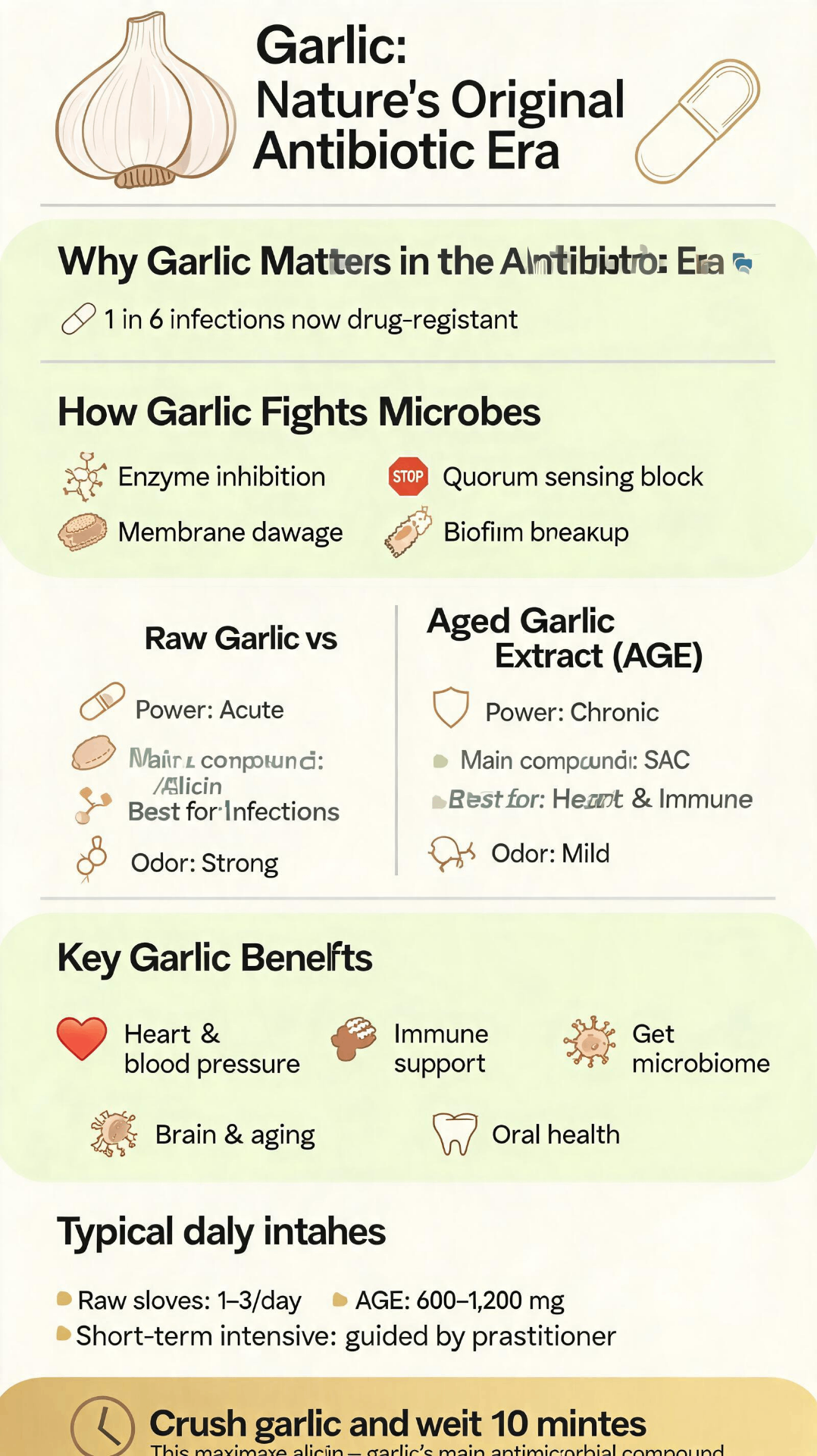
But allicin doesn't work alone. It rapidly decomposes into a cascade of organosulfur compounds — ajoene, diallyl sulfide (DAS), diallyl disulfide (DADS), and diallyl trisulfide (DATS) — each with overlapping and distinct biological activities. A comprehensive review in Frontiers in Immunology documented how this chemical complexity attacks bacterial cells through four simultaneous mechanisms:
- Enzyme inhibition — Allicin and thiosulfinates form disulfide bonds with bacterial enzymes' sulfhydryl (–SH) groups, disabling essential metabolic pathways
- Membrane disruption — Organosulfur compounds increase bacterial membrane permeability, causing leakage of intracellular contents and eventual cell death
- Quorum sensing inhibition — Ajoene and DADS interfere with how bacteria "communicate" to coordinate biofilm formation and collective virulence
- Antibiofilm activity — Garlic extracts break down and prevent the protective biofilms that shield pathogens from antibiotics
This multi-target approach is the key difference between garlic and a pharmaceutical antibiotic. Conventional antibiotics hit a single molecular target — which is exactly why bacteria can evolve around them with a single genetic mutation. To escape garlic's effects, a pathogen would need to simultaneously modify four distinct molecular targets, a burden most pathogens simply cannot sustain.
The Clinical Evidence Is Stronger Than You Think
Garlic vs. Metronidazole for Bacterial Vaginosis
A randomized controlled trial enrolled 120 women diagnosed with bacterial vaginosis (BV) and compared garlic tablets directly against metronidazole, the standard pharmaceutical treatment. The garlic preparation — 500 mg tablets delivering 8.9 mg of alliin per dose, taken twice daily for seven days — produced a 70% reduction in BV versus only 48.3% for metronidazole, with significantly fewer side effects in the garlic group.
What makes this even more remarkable: metronidazole, the drug garlic outperformed, is classified as a probable human carcinogen by both the U.S. National Toxicology Program and the WHO's International Agency for Research on Cancer (IARC). Women who require repeated treatment for recurrent BV are repeatedly exposed to that risk — a fact rarely raised in clinical settings.
Garlic Against MRSA
Methicillin-resistant Staphylococcus aureus (MRSA) is one of the most feared organisms in modern medicine. A study published in the British Journal of Biomedical Science tested a stable aqueous allicin extract against 30 clinical MRSA isolates — including strains resistant to mupirocin, the front-line topical antibiotic for MRSA decolonization. All 30 strains were inhibited at 32 µg/mL allicin, and 88% were inhibited at just 16 µg/mL. Mupirocin resistance was present in 82% of those same isolates — yet not one escaped allicin.
A 2026 Systematic Review of 50 Studies
A 2026 PRISMA-compliant systematic review analyzed 50 peer-reviewed studies conducted between 2000 and 2025. Its conclusions confirmed garlic's significant antimicrobial activity against a wide spectrum of multidrug-resistant bacteria including S. aureus, Pseudomonas aeruginosa, E. coli, Klebsiella pneumoniae, and others. The authors also documented garlic's role as a potential adjuvant — enhancing the efficacy of conventional antibiotics when used in combination.
Garlic and Gastric Cancer Prevention — a 22-Year Story
A 22-year follow-up of a large randomized intervention trial found garlic supplementation was associated with a statistically significant reduced risk of death from gastric cancer over the entire follow-up period. In a separate meta-analysis of 18 studies covering 142,921 subjects, high garlic consumption was associated with a 51% reduced gastric cancer risk in case-control analyses. Multiple garlic compounds — allicin, DADS, DATS, and ajoene — have been shown in cell and animal studies to induce apoptosis (cancer cell death), cause cell cycle arrest, and in some models, help overcome chemotherapy resistance.
Aged Garlic Extract (AGE): A Different Kind of Power
Fresh garlic and aged garlic are not the same thing — and knowing the difference is essential for targeted therapeutic use.
Aged Garlic Extract (AGE) is produced by aging raw garlic in a water-ethanol solution for more than 10 months. During this slow transformation — not cooking, not fermenting, but a specific long-term metabolic conversion — the unstable allicin is converted into stable, water-soluble organosulfur compounds. The most well-known of these are S-allylcysteine (SAC) and S-allylmercaptocysteine (SAMC). But as 2026 research revealed, there's a third compound forming quietly in the aging process that nobody had paid much attention to — until now.
The aging process also raises S-allylcysteine (SAC) concentrations to up to 8,000 µg/g, far beyond what raw garlic can offer. AGE is odorless, stomach-friendly, and carries a fundamentally different — and in many ways deeper — therapeutic profile than fresh garlic.
Raw Garlic vs. Aged Garlic Extract at a Glance
| Property | Raw/Fresh Garlic | Aged Garlic Extract (AGE) |
|---|---|---|
| Primary active compound | Allicin (unstable) | SAC, SAMC, S1PC (stable) |
| Antimicrobial activity | Strong, fast-acting | Moderate, broad-spectrum |
| Antioxidant protection | Effective but short-lived | High, long-lasting |
| Gut-friendliness | May irritate stomach | Gentle, stomach-friendly |
| Odor | Strong | Essentially odorless |
| Anti-glycation | Modest | Significantly stronger |
| Muscle & aging support | Minimal evidence | Groundbreaking 2026 data |
| Best use case | Acute antimicrobial action | Chronic prevention, cardiovascular, muscle longevity |
The 2026 Breakthrough: Garlic, Your Fat, Your Brain, and Your Muscles
Cell Metabolism, May 2026 — one of the most prestigious journals in biomedical science — published a study that rewrites how we understand aged garlic extract's role in aging.
The research team, led by Dr. Shin-ichiro Imai at the Institute for Research on Productive Aging (IRPA) in Tokyo, focused on S-1-propenyl-L-cysteine (S1PC) — a sulfur-containing amino acid that exists only in trace amounts in raw garlic but accumulates significantly during the long aging process used to produce AGE.
What they discovered was a completely previously unknown inter-organ signaling pathway linking fat tissue, the brain, and skeletal muscle — and S1PC is the compound that starts the entire conversation.
The Fat → Brain → Muscle Relay
Here is what happens inside your body when S1PC is absorbed:
- S1PC travels to white adipose (fat) tissue and activates the enzyme LKB1 (liver kinase B1) by enhancing its complex formation with proteins STRAD and MO25
- LKB1 activates SIRT1 — a well-known NAD⁺-dependent anti-aging enzyme associated with longevity
- SIRT1 triggers fat cells to release eNAMPT (extracellular nicotinamide phosphoribosyltransferase) into the bloodstream, packed inside protective extracellular vesicles
- eNAMPT travels through the blood to the hypothalamus — the brain's master regulatory center — where it boosts NAD⁺ production and amplifies sympathetic nervous system signaling
- The brain sends strengthened signals to skeletal muscles, improving their force, contractility, and function
What makes this remarkable is the indirection of it. S1PC doesn't talk to muscle at all — it initiates a chain of communication between organs that, working together, help restore what aging has taken away. "Our findings present a previously unrecognized and unique function of S1PC in activating LKB1, and in promoting an inter-organ communication that ameliorates muscle frailty," said Dr. Imai.
Why NAD⁺ Is the Core of This Story
eNAMPT is an enzyme critical for synthesizing NAD⁺ — the molecule your cells rely on for energy production, DNA repair, and cellular protection. NAD⁺ declines significantly with age, and that decline is now considered one of the central drivers of the aging process itself. This is the same pathway targeted by high-profile longevity supplements like NMN (nicotinamide mononucleotide) and NR (nicotinamide riboside).
What's striking about S1PC is that it doesn't raise NAD⁺ directly — it stimulates the body's own fat tissue to release the enzyme needed to make more NAD⁺, using the brain as the relay station. It's not supplementing the pathway; it's re-activating the body's own machinery.
What the Research Showed
In aged mice (15–23 months old, equivalent to elderly humans), eight months of daily S1PC supplementation produced:
- Significantly reduced frailty index scores across 31 health markers
- Increased skeletal muscle force and grip strength
- Restored core body temperature — a systemic marker of aging and metabolic vitality that is not commonly reversed by nutritional interventions
Notably, muscle size did not increase — but muscle function and force did. This suggests a neurological and energetic mechanism rather than a hypertrophic one.
In a human double-blind placebo-controlled trial, 44 healthy men and women aged 20–49 received a single oral dose of 25 mg S1PC (from high-concentration aged garlic powder). Circulating eNAMPT levels rose significantly within 120 minutes in participants with healthy adipose tissue. This is an important nuance: the pathway depends on having sufficient fat tissue. Fat is not the villain here — it's the dispatcher. Individuals with very low body fat mass (BMI below approximately 18.5) showed a reduced response.
S1PC + NMN: The Synergy Angle
The research team also tested combining S1PC with NMN in aged mice, finding the combination further enhanced eNAMPT secretion beyond either compound alone. The researchers called for human trials testing the same combination. This positions S1PC and NMN as potentially complementary tools in a longevity protocol — one activating the fat-to-brain signaling axis, the other directly supplying NAD⁺ precursors.
Key Caveats — Read Before You Act
- S1PC is exclusive to aged garlic — raw garlic, cooked garlic, and standard garlic powder do not produce it in meaningful amounts
- The human study was a single-dose, short-term trial — longer studies confirming actual functional improvements in elderly humans are still needed
- The study was partly conducted in partnership with Wakunaga Pharmaceutical (maker of Kyolic AGE) — a transparent conflict of interest worth knowing, though the research was published in a high-impact peer-reviewed journal
- Further work is needed to determine whether S1PC specifically from standard AGE supplements reaches the same concentrations as used in the study formulation
The Full Benefits of Aged Garlic Extract
Heart and Vascular Health
AGE has one of the most robust evidence profiles of any natural supplement for cardiovascular support. Research has demonstrated it can lower blood pressure (particularly in hypertensive individuals), reduce LDL oxidation, decrease arterial stiffness, inhibit platelet aggregation, and modestly reduce total cholesterol with regular use. A 2025 NIH-indexed study specifically found AGE exerted anti-atherosclerotic effects by reducing plaque buildup and modulating inflammatory pathways in vascular tissue.
Antioxidant and Anti-Aging Effects
AGE is exceptionally rich in stable antioxidant compounds. The slow aging process converts unstable allicin into highly bioavailable antioxidants — notably SAC — which scavenge reactive oxygen species, enhance the body's own antioxidant enzymes (superoxide dismutase, catalase, glutathione peroxidase), raise intracellular glutathione, and inhibit lipid peroxidation. AGE is also significantly more effective than raw garlic at inhibiting glycation — the damaging process where sugars bind to proteins and lipids, accelerating tissue aging and contributing to diabetes complications.
Immune System Modulation
In a double-blind, placebo-controlled trial, adults who supplemented with AGE (2.56 g daily) for 90 days showed greater activation of natural killer (NK) cells and γδ-T cells, while simultaneously secreting fewer inflammatory cytokines. This sharpens the immune system's targeted killing ability while dialing down the chronic inflammation that drives aging. A separate randomized trial found daily AGE supplementation helped preserve NK cell number and activity in patients with advanced cancer.
Gut Microbiome Support
Unlike pharmaceutical antibiotics — which wipe out beneficial bacteria along with pathogens — garlic does the opposite. A clinical trial found three months of AGE supplementation produced significant increases in gut microbiome richness and diversity, with elevated populations of Lactobacillus and other protective commensal communities. A 2025 study also found that a two-week AGE regimen improved colorectal motility and reduced oxidative stress in gut cells of aged animal models.
Oral and Periodontal Health
A 2025 study published in BMC Complementary Medicine and Therapies tested AGE against seven key periodontal pathogens including Porphyromonas gingivalis, Fusobacterium nucleatum, and Aggregatibacter actinomycetemcomitans. AGE inhibited all tested organisms at concentrations of 12.5 to 100 µg/mL, while maintaining 90% viability of gingival fibroblasts. By comparison, chlorhexidine — the dental gold standard antiseptic — left nearly zero periodontal ligament cells viable.
Brain and Neurological Protection
SAC and S1PC both demonstrate neuroprotective properties. AGE has been shown to reduce oxidative stress and inflammatory processes in brain tissue, show potential protective effects in Alzheimer's and Parkinson's disease models, and improve cognitive function and memory in aging animal studies. The 2026 Cell Metabolism study adds another layer: S1PC's ability to raise NAD⁺ in the hypothalamus through the eNAMPT pathway may also support broader brain resilience and neurological vitality.
What Garlic Fights — The Pathogen List
The evidence base for garlic's antimicrobial reach spans an impressive range:
- MRSA and drug-resistant Staphylococcus aureus
- Helicobacter pylori (stomach ulcers, gastritis, gastric cancer risk)
- Pseudomonas aeruginosa (drug-resistant lung and wound pathogen)
- Klebsiella pneumoniae (drug-resistant lung and UTI pathogen)
- E. coli (gut and urinary tract infections)
- Clostridium difficile (hospital-acquired gut infection)
- MDR tuberculosis strains
- Candida albicans and other fungal pathogens
- Periodontal pathogens (P. gingivalis, F. nucleatum, A. actinomycetemcomitans)
- Salmonella species
- Multiple viral families — garlic's organosulfur compounds have documented antiviral activity across influenza, coronaviruses, and other viral pathogens
The 10-Minute Rule: Getting the Most from Fresh Garlic
One of the most actionable pieces of garlic science is also one of the least known. Inside an intact garlic clove, alliin and alliinase are stored in separate cellular compartments. Only when the cell walls are crushed does the enzymatic reaction begin. Allicin formation peaks at approximately 10 minutes after crushing — and heat destroys the alliinase enzyme before it can complete its work.
The protocol for maximum allicin:
- Crush, chop, or press fresh garlic cloves
- Let them rest at room temperature for 10 minutes — the reaction is actively forming allicin
- Then add to food, eat raw, or take therapeutically
- If cooking, add the pre-activated garlic to your dish after removing from heat
Waiting those 10 minutes can produce 2.5 to 4 times more allicin than eating garlic immediately after crushing. Adding raw garlic directly to a hot pan destroys up to 90% of its medicinal potential before you even consume it.
Dosage: How Much Is Effective?
| Application | Form | Effective Dose Range | Notes |
|---|---|---|---|
| General antimicrobial / immune support | Raw crushed garlic | 2–5 cloves daily | Use the 10-minute rule; take with food |
| Bacterial vaginosis (RCT) | Garlic powder tablet | 500 mg / 8.9 mg alliin, twice daily x 7 days | Head-to-head vs. metronidazole |
| Blood pressure support | AGE supplement | 600–1,200 mg daily | Best evidence for sustained supplementation |
| Cardiovascular prevention | AGE supplement | 1,200–2,400 mg daily | Consistent with most cardiovascular trials |
| Immune / NK cell support | AGE supplement | 500–2,560 mg daily | 90-day protocol for NK cell boost |
| Periodontal health | AGE supplement | 300–500 mg daily x 12–18 months | Randomized double-blind data |
| Muscle aging / S1PC pathway | AGE supplement (high S1PC) | 25 mg S1PC (human trial dose) | Kyolic AGE is the best-studied source |
| Raw garlic — daily culinary use | Fresh cloves | 1–4 cloves daily | Safe, practical daily habit |
For raw garlic, a single medium clove weighs approximately 3–6 grams. The general evidence-supported safe range for therapeutic raw garlic use is about 2–5 grams (roughly 1–2 cloves) per day, though many traditional protocols work with higher amounts.
Choosing Your Form: Which Garlic for Which Goal
Raw/Fresh Garlic → Best for acute antimicrobial use, gut health, and immune stimulation. Highest in allicin when properly prepared. Use raw in salads, dressings, and as a daily food practice.
Garlic Powder / Standardized Tablets → Useful when alliin content is standardized on the label. More convenient for controlled dosing and clinical protocols. Look for products assayed for alliin or allicin yield.
Aged Garlic Extract (AGE) → Best for chronic disease prevention, cardiovascular support, neuroprotection, long-term immune modulation, and muscle and aging support — including the newly identified fat-brain-muscle NAD⁺ pathway. Kyolic is the most studied brand and was the AGE used in the 2026 Cell Metabolism research. Odorless and easy to take daily.
AGE + NMN Stack → The combination was tested in the 2026 research and showed enhanced eNAMPT secretion beyond either supplement alone. For anyone already supplementing with NMN or NR for NAD⁺ support, adding AGE (specifically for S1PC content) may amplify the fat-to-brain signaling that boosts hypothalamic NAD⁺ and muscle vitality.
Important Safety Considerations
Garlic carries an excellent overall safety profile. A few points deserve attention:
- Anticoagulant interactions — Garlic has antithrombotic effects. Anyone on blood thinners (warfarin, aspirin, clopidogrel) should use high-dose garlic cautiously and consult their practitioner first
- Pre-surgery caution — Stop high-dose garlic 7–10 days before any surgical procedure, as garlic can prolong bleeding time
- Digestive sensitivity — Some people experience bloating, gas, or heartburn with raw garlic, particularly on an empty stomach. AGE is far gentler in this regard
- FODMAP sensitivity — People with fructan intolerance may react to raw garlic; AGE is generally much better tolerated
- The adipose threshold — The S1PC muscle pathway requires healthy fat mass. Individuals with very low body fat may see limited benefit from this specific mechanism
The Bigger Picture: Garlic as a Systems Medicine
What ties all of this together — the antimicrobial activity, the cardiovascular protection, the immune modulation, the gut microbiome support, and now the fat-brain-muscle longevity axis — is that garlic doesn't operate through a single mechanism. It participates in multiple biological conversations simultaneously, in a way that no pharmaceutical drug has ever replicated.
The ancient physicians of Egypt, India, China, Greece, and Rome weren't primitive when they documented garlic's healing properties. They were empiricists working with extraordinary biological complexity across generations of clinical observation. Modern science, slowly and methodically, is validating their findings with double-blind trials, transmission electron microscopy, and now, with gene expression analysis in Cell Metabolism. The humble bulb in your kitchen hasn't changed. Our understanding of it just got a whole lot deeper.
This article is for educational purposes only. Always consult a qualified healthcare practitioner before using garlic therapeutically if you are on medications, pregnant, or managing a serious medical condition.
Frequently asked questions
Is garlic really as effective as antibiotics?
For certain infections, the clinical evidence is striking — garlic tablets outperformed metronidazole for bacterial vaginosis in a randomized trial, and allicin inhibited all 30 MRSA strains tested in one study. Garlic is best viewed as a powerful complement and, in some contexts, an adjuvant that enhances conventional antibiotics, not a blanket replacement for prescribed treatment of serious infections.
Why should I crush garlic and wait 10 minutes before using it?
Crushing ruptures the cells so the enzyme alliinase can convert alliin into allicin, garlic's main antimicrobial compound. That reaction peaks around 10 minutes, and heat destroys the enzyme before it finishes. Waiting can yield 2.5 to 4 times more allicin, and adding pre-crushed garlic after cooking preserves potency.
What is the difference between raw garlic and aged garlic extract?
Raw garlic is rich in unstable, fast-acting allicin and is best for acute antimicrobial use. Aged garlic extract (AGE) is aged over 10 months, converting allicin into stable S-allylcysteine and S1PC. AGE is odorless, gentle on the stomach, and best for long-term cardiovascular, immune, brain, muscle, and antioxidant support.
What is the 2026 aged garlic muscle discovery about?
A Cell Metabolism study found that S1PC, a compound that accumulates in aged garlic, activates a fat → brain → muscle signaling pathway. It prompts fat tissue to release eNAMPT, which raises NAD⁺ in the brain and strengthens signals to muscle — improving muscle force in aged mice and raising eNAMPT in humans with healthy fat mass.
How much garlic should I take daily?
For general use, 1–2 raw cloves (about 2–5 grams) per day is a well-supported range. For cardiovascular and immune support, aged garlic extract is typically dosed at 600–1,200 mg or higher daily. Always tailor higher therapeutic doses with a practitioner, especially if you take medications.
Are there people who should be careful with garlic?
Yes. Because garlic thins the blood, those on anticoagulants should be cautious, and high-dose garlic should be stopped 7–10 days before surgery. People with FODMAP or fructan sensitivity may tolerate AGE better than raw garlic. When in doubt, check with your healthcare provider.