Anti-Nutrients in Vegetables: Oxalates, Phytates & How to Reduce Them
Learn how oxalates, phytates, lectins, and other anti-nutrients affect your health — and simple kitchen methods (soak, boil, sprout, rotate) to enjoy plants safely.
Maya Mountain Naturals Editorial · Published July 2026 · 11 min read
Quick answer
- Anti-nutrients are natural plant compounds — oxalates, phytates, lectins, tannins, and goitrogens — that can block minerals or irritate tissues when consumed in excess.
- In normal amounts, most anti-nutrients have real health benefits (antioxidant, blood sugar, anti-cancer). Problems appear when the same high-anti-nutrient foods are eaten every day.
- Oxalates are the biggest concern for older adults: they can form kidney stones and, in sensitive people, irritate joints, connective tissue, and mitochondria.
- Highest-oxalate foods: spinach, Swiss chard, beet greens, rhubarb, almonds, chia, quinoa, and cocoa. Rotate — don't live on daily spinach smoothies.
- Simple kitchen tools tame anti-nutrients: soak, boil (and discard water), sprout, and ferment. Pair high-oxalate meals with calcium-rich foods and drink plenty of water.
What Are Anti-Nutrients?
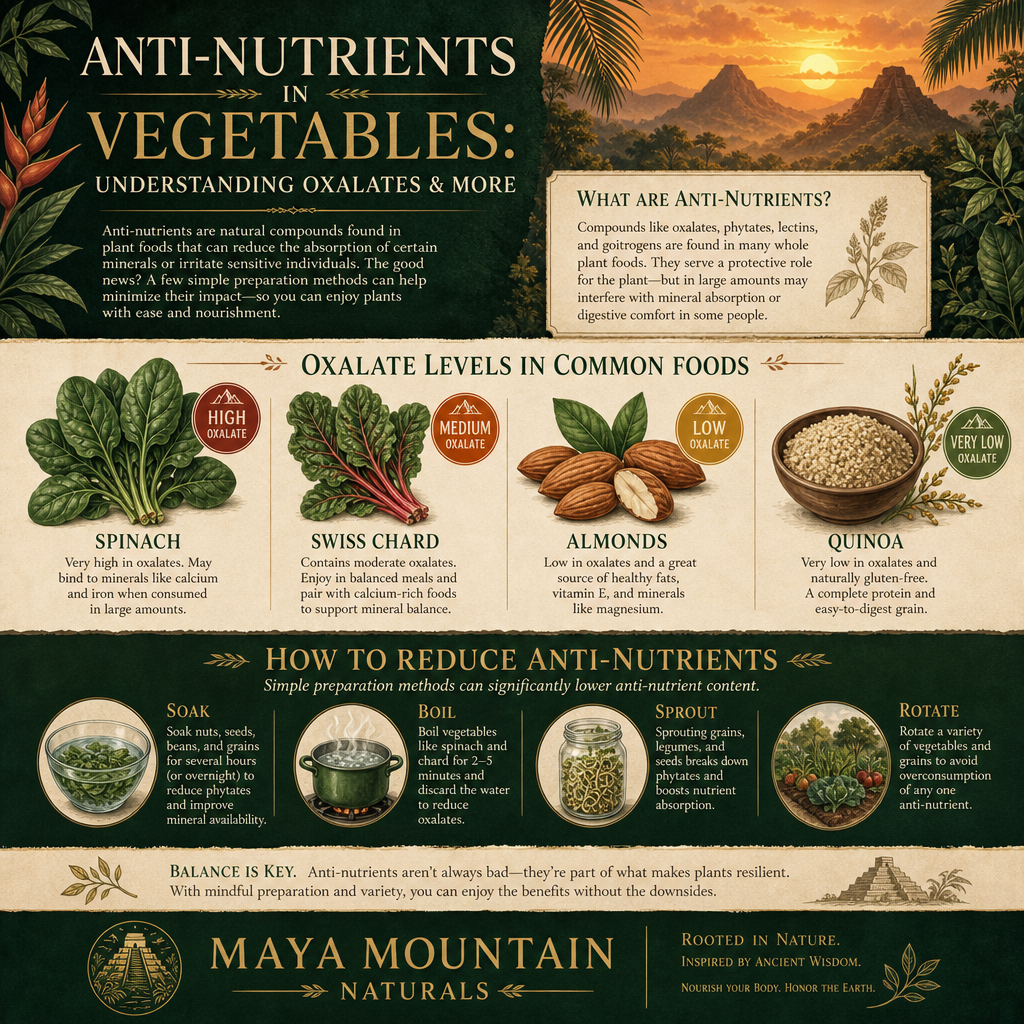
Plants make many chemical compounds to protect themselves, store nutrients, and interact with their environment. Some of these can block or steal nutrients from us when we eat them in large amounts — these are called anti-nutrients.
The main ones you'll hear about are:
- Oxalates – can grab calcium and other minerals, and form crystals.
- Phytates – can block minerals like iron, zinc, and calcium.
- Lectins – can irritate the gut if foods are not cooked well.
- Tannins – can make iron harder to absorb.
- Goitrogens – in some greens that can stress the thyroid if iodine is very low.
Important point: in normal amounts, many of these have benefits (antioxidant, anti-cancer, blood sugar support). Problems show up when:
- The same high-anti-nutrient foods are eaten every day
- Kidneys, gut, or blood vessels are already under stress
- There's not enough water, calcium, or variety in the diet
Oxalates: The Big Trouble-Maker
What are oxalates?
Oxalates are natural chemicals found in many plant foods — especially leafy greens, nuts, seeds, and some grains. They can:
- Bind to minerals (like calcium) in your gut
- Form crystals (often calcium oxalate) that can turn into kidney stones
- Irritate tissues when too many crystals build up
Most people can handle small to moderate amounts of oxalates. Trouble comes when the daily load is high and the body's "drain" (kidneys, gut, detox) is struggling.
Which Foods Are Highest in Oxalates?
You don't need to memorize numbers; think in tiers.
Very High-Oxalate Vegetables
These are the biggest "green" contributors:
- Spinach (especially raw in smoothies or salads) – extremely high
- Swiss chard
- Beet greens
- Rhubarb
Eating these occasionally is fine for most people. Eating large amounts every day, especially in juices or smoothies, can be a problem for oxalate-sensitive people.
Other High-Oxalate Foods
- Nuts & seeds: especially almonds, chia, sesame, cashews, peanuts
- Grains: buckwheat, quinoa, wheat bran, some brown rice
- Starchy vegetables: sweet potatoes, beets
- Chocolate and cocoa
- Black tea (several cups a day add up)
Lower-oxalate choices include:
- Greens: romaine, cabbage, butter lettuce, arugula
- Fruits: banana, strawberries, peeled apples
- Nuts/seeds: pecans, hemp seeds; walnuts are moderate
How Can Oxalates Affect Health?
Kidneys and urinary tract
High oxalate intake can:
- Raise oxalate levels in urine
- Promote calcium oxalate kidney stones
- Irritate the urinary tract, causing pain and inflammation
This is well documented in conventional medicine.
Whole-body effects (beyond the kidneys)
Emerging research and integrative nutrition work suggest that excess oxalates in sensitive people may:
- Irritate joints, skin, and connective tissue
- Stress mitochondria (your energy factories)
- Aggravate vascular and microcirculation issues
Think of oxalates as tiny "needles" that, in excess, can irritate delicate tissues — especially where blood flow is already compromised.
People who might react more strongly include those with:
- Kidney disease or reduced kidney function
- Gut issues (IBD, celiac, SIBO, fat malabsorption)
- Very low calcium intake
- High-dose vitamin C supplements
- Very high "healthy plant food" intake built around spinach, almonds, and quinoa every day
Other Anti-Nutrients in Vegetables (In Simple Terms)
Phytates (phytic acid)
- Found in whole grains, beans, nuts, seeds.
- Can block some mineral absorption (iron, zinc, calcium).
- Also act as antioxidants and may protect against cancer.
- Soaking, sprouting, and fermenting grains/beans reduces phytates and makes minerals more available.
Lectins
- Found in beans, lentils, peas, peanuts, some nightshades.
- Raw or undercooked, they can irritate the gut; properly cooked, they're largely broken down.
- Traditional soaking and thorough cooking solves most lectin problems.
Goitrogens
- Found in broccoli, cabbage, kale, Brussels sprouts.
- Very high intakes with low iodine can mildly stress the thyroid.
- Normal amounts are safe for most people, especially if iodine intake is adequate.
How to Make Vegetables Safer and Easier on Your Body
You do not need to stop eating vegetables. Just use some simple tools to lower the anti-nutrient burden.
1. Rotate your greens
Don't hammer the same high-oxalate greens every day. Instead of daily spinach/chard smoothies, rotate:
- Romaine, cabbage, mixed lettuce, arugula, herbs
- Use spinach or chard occasionally, not as the default.
2. Pair high-oxalate foods with calcium
Calcium in your gut grabs oxalates and helps you pass them out instead of absorbing them.
Good combos:
- Spinach or beet salads with cheese or yogurt
- Nuts or berries with yogurt, kefir, or calcium-rich foods
- Chard or kale with sardines (bones in) or canned salmon
Target: 2–3 servings of calcium-rich foods per day, especially with higher-oxalate meals.
3. Use water and heat wisely
Many prep methods lower anti-nutrients:
- Boil or blanch high-oxalate greens and discard the cooking water — this can cut oxalate content by a third or more.
- Steam and drain vegetables instead of eating everything raw.
- Soak beans and grains overnight and toss the soak water before cooking — reduces phytates, tannins, and some oxalates.
- Sprout or ferment grains, seeds, and beans (e.g., sourdough bread, fermented lentil dishes) — further reduces phytates and lectins.
4. Drink enough water
Water dilutes oxalates in the urine and lowers the chance of crystals forming. Aim for 10–12 glasses of fluid per day if you're at risk of stones (kidney history, older age, hot climate). Lemon water may help by providing citrate, which can protect against stone formation.
5. Be mindful of supplements and "health hacks"
- Keep vitamin C supplements around 500 mg/day or less if you're stone-prone.
- Avoid very high sodium and heavy daily protein "bulking" — both strain kidney and mineral handling.
- Don't base your "healthy diet" on spinach smoothies, almond flour baking, and quinoa bowls every single day; variety is safer.
Simple Rules MMN Readers Can Follow
For older adults concerned about kidneys, heart, and inflammation:
- Rule 1: Eat vegetables — but mix and rotate them. Don't live on spinach and chard.
- Rule 2: Combine high-oxalate foods with calcium-rich foods and plenty of water.
- Rule 3: Use soaking, boiling, steaming, and sprouting to tame anti-nutrients, especially in beans and whole grains.
- Rule 4: If you've had kidney stones or unexplained joint/vascular pain, consider talking with a practitioner about a low-oxalate trial, not a DIY crash diet.
- Rule 5: Remember that "plant power" is real — but like all power, it needs good handling and balance.
Frequently asked questions
Are anti-nutrients dangerous?
Not for most people in normal amounts. Anti-nutrients like oxalates, phytates, and lectins only become problematic when the same high-anti-nutrient foods are eaten daily, or when kidneys, gut, or mineral status are already compromised. In moderate amounts, many double as antioxidants with real health benefits.
Should I stop eating spinach and kale?
No — just rotate them. Spinach and chard are very high in oxalates, so daily green smoothies built around them can push the load too high. Rotate with romaine, arugula, cabbage, butter lettuce, and herbs, and keep spinach and chard as occasional (not daily) foods.
Does cooking remove anti-nutrients?
It reduces them significantly. Boiling high-oxalate greens and discarding the water can cut oxalate content by a third or more. Soaking, sprouting, and fermenting beans and grains lowers phytates and lectins dramatically. Raw is not always healthier.
How do I know if I'm oxalate-sensitive?
Common signals include a history of kidney stones, unexplained joint or connective-tissue pain, urinary irritation, or reactions after ramping up "healthy" foods like spinach smoothies, almond flour, and daily quinoa. If suspected, work with a practitioner on a structured low-oxalate trial rather than a DIY crash diet.
What pairs best with high-oxalate foods?
Calcium-rich foods eaten in the same meal. Calcium binds oxalates in the gut so they leave the body instead of being absorbed. Pair spinach with cheese or yogurt, chard with sardines or canned salmon, and drink plenty of water throughout the day.
[[RELATED slugs=aging-is-an-energy-problem-mitochondria,fatty-liver-blood-sugar-natural-solutions,the-12-tissue-salts]]
Educational content only — not medical advice. Consult a qualified practitioner for personal health decisions, especially if you have kidney disease, a history of stones, or a diagnosed digestive condition.
Sources: Harvard T.H. Chan School of Public Health – Nutrition Source; Cleveland Clinic Abu Dhabi; PMC / NCBI reviews on dietary anti-nutrients; Oxalosis and Hyperoxaluria Foundation.